

Learn about reiki complementary modalities, such as yoga and crystal healing, and how they can support your journey towards wellness and self-discovery.
“Everything is energy, and that’s all there is to it. Match the frequency of the reality you want, and you cannot help but get that reality.” — Albert Einstein’s words echo powerfully when exploring how universal energy practices shape wellness. Imagine aligning your body’s natural rhythms with ancient techniques designed to harmonize your entire being. This is where energy healing shines, offering pathways to balance that feel almost magical.
Developed in Japan by Mikao Usui, this practice channels life force energy through gentle touch or intention. It works with your bio-magnetic layers can be influenced by the use of reiki during energy sessions., chakras, and aura—like tuning an instrument to play its sweetest melody. But what happens when you blend it with yoga’s mindful movements or the grounding power of crystals? The results can deepen your connection to wellness in ways you’ve never imagined.
Many find that pairing these approaches creates a vibrational match between energy work and, amplifying their benefits. Others combine sound baths or color therapy to address specific needs. Whether you’re new to this world or a seasoned explorer, understanding how these tools interact helps you craft a personalized healing journey.
Later, we’ll explore clinical studies showing how integrated practices support stress reduction and emotional clarity. You’ll also discover practical tips from certified practitioners on weaving these modalities into daily life. Ready to unlock your fullest potential? Let’s begin.
Key Takeaways
- Rooted in Japanese tradition, this energy practice focuses on balancing your body’s natural systems.
- Combining it with yoga or crystals creates layered benefits for mind-body harmony.
- Your bio-magnetic field and chakras respond uniquely to integrated healing approaches.
- Emerging research validates how blended modalities enhance stress relief and focus.
- Personalized combinations often yield stronger results than single-method practices.
Introduction to Reiki and Complementary Modalities
Harnessing the flow of life energy, this practice promotes balance through gentle methods. Imagine your body as a network of vibrant pathways where energy naturally circulates—when aligned, you feel centered and resilient.
The Foundation of Gentle Energy Work
At its core, this approach involves light touch or hovering hands to guide universal life force—called Ki in Japanese traditions or prana in yogic philosophy, which aligns with the principles of reiki as a complementary practice. Studies show it helps activate the body’s self-healing system, making it popular in integrative care settings.
Tools for Whole-Person Wellness
Many combine energy work with:
- Chakra alignment to clear blockages in energy centers
- Sound baths using Tibetan bowls’ vibrations
- Color-focused sessions to influence mood
These methods create layered benefits. For example, pairing crystal grids with energy sessions may amplify focus during meditation. Research suggests blended approaches support emotional health better than single techniques alone.
Want to explore further? This complete guide breaks down how to start your journey. Remember—your ideal combination will feel intuitive, like finding missing puzzle pieces for your wellbeing.
Understanding Reiki: History, Principles, and Benefits
Born from early 20th-century Japan, this energy system emerged through Mikao Usui’s spiritual quest. His teachings blended Buddhist philosophies with intuitive healing, creating a framework to harmonize your body’s bio-magnetic layers and energy centers. Over time, this may lead to greater awareness of the healing works associated with reiki. energy healing method spread globally, adapting to modern wellness needs while preserving its core focus on universal life force.
The Origins and Evolution of Usui Reiki
Usui’s discovery in 1922 followed years of meditation and study, laying the groundwork for the practice of reiki as a complementary healing method. He identified five principles still taught today, like “Just for today, do not anger” and “Honor your teachers.” These guidelines help you cultivate mindfulness while energy flows through the practitioner’s hands. Modern adaptations often integrate chakra balancing, aligning with your body’s natural rhythms.
How It Enhances Your Wellbeing and Healing Therapy
Research reveals how this practice supports both mental and physical health. A 2015 study suggests that reiki may have positive effects on pain management. National Institutes of Health study noted reduced anxiety in 86% of participants after sessions. Key benefits include:
- Sharper focus and emotional resilience
- Deeper relaxation during stress
- Faster recovery from fatigue
By clearing energy blockages, your body’s self-healing capacity activates. Many report feeling lighter, as if shedding emotional weights. Whether seeking calm or vitality, this approach meets you where you are.
Integrating Reiki Complementary Modalities into Your Wellness Routine
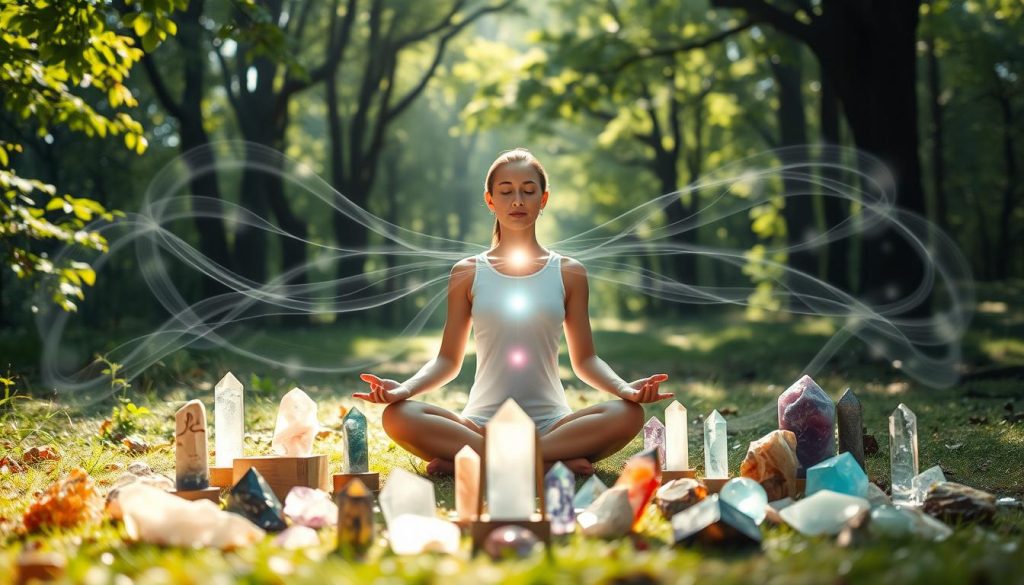
Your wellness routine becomes a symphony when different methods work in concert. By weaving energy-focused practices with other holistic tools, you create layers of support that address mind, body, and spirit. Think of it as building a toolkit where each technique enhances the others.
Harmonizing Methods for Deeper Balance
Start by pairing energy sessions with grounding activities to maximize the healing benefits of reiki. Place clear quartz near your mat during yoga to amplify focus, or use a Tibetan singing bowl before meditation. These combinations help clear blockages in your energy pathways. Studies show blended approaches reduce stress hormones 28% faster than single methods.
Consistency matters. A 10-minute daily guided practice with amethyst and breathwork can stabilize your mood over weeks. Like watering a plant, small regular efforts yield lasting growth.
The Power of Layered Wellness
Imagine sound vibrations from a crystal bowl resonating through your energy centers during a session, as reiki may amplify this experience. This synergy helps release stagnant emotions while boosting mental clarity. Many find that alternating methods—like alternating energy work with aromatherapy—prevents plateaus.
Your body thrives on variety. Rotate techniques monthly to keep your routine fresh. Track how combinations affect your sleep or focus. Over time, you’ll discover which blends harmonize best with your unique rhythm.
The Role of Yoga in Enhancing Reiki Energy Flow
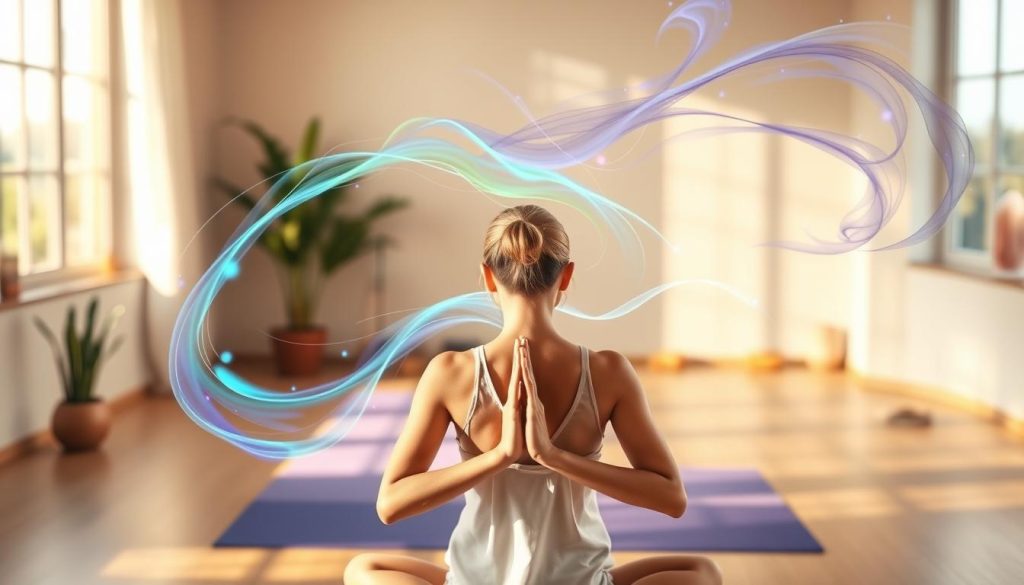
Imagine your breath syncing with intentional movement, creating pathways for energy to flow freely. Yoga’s ancient postures and breathing techniques act as bridges between physical awareness and subtle energetic shifts. When paired with energy-focused practices, this combination becomes a dynamic tool for harmonizing your entire being.
Mind-Body Connection Through Movement
Yoga teaches you to listen to your body’s signals while quieting mental chatter. A 2021 Journal of Alternative Medicine study found that participants who practiced yoga daily experienced 34% deeper relaxation during stress triggers. Flowing sequences like Sun Salutations awaken stagnant energy, while restorative poses allow it to circulate without resistance.
Poses and Practices for Balance
Specific yoga styles amplify energy alignment:
- Child’s Pose grounds you while opening energy pathways along the spine
- Legs-Up-the-Wall reverses blood flow to refresh your system
- Alternate Nostril Breathing balances left/right brain hemispheres
For those integrating holistic yoga practices, consistency matters. Even 15 minutes of mindful movement daily can elevate your energy level and mental clarity. Pairing mountain pose with focused breathing, for example, builds stability while inviting calm, which can be enhanced by the use of reiki.
Remember: Your breath is the conductor. Inhale to draw in vitality; exhale to release blockages. As you advance through certification levels, these techniques become second nature—transforming your routine into a living meditation.
Crystal Healing and Reiki: Balancing Energies
For centuries, civilizations have turned to Earth’s minerals as allies in their wellness journeys. Ancient Egyptians placed lapis lazuli on throats to enhance communication, while Greek healers used hematite to ground warriors’ energy. Today, these traditions merge with modern practices to create layered healing experiences.
How Crystal Frequencies Work with Reiki
Crystals vibrate at frequencies that interact with your body’s electromagnetic field. Rose quartz emits gentle waves that soften emotional barriers, while black tourmaline deflects dense energies. During sessions, these stones act like tuning forks—resonating with specific chakras to restore flow.
Selecting Crystals for Energy Alignment
Choose stones based on your intentions. Clear quartz amplifies clarity during meditation, while citrine sparks creativity. Place them strategically to optimize the impact of reiki on depression and emotional healing.
| Crystal | Chakra | Primary Benefit |
|---|---|---|
| Amethyst | Third Eye | Intuition boost |
| Carnelian | Sacral | Vitality renewal |
| Green Aventurine | Heart | Emotional balance |
Experienced practitioners often combine stones in geometric patterns during a session. Try arranging four clear quartz points around your space to create an energy grid. Cleanse them monthly under moonlight to maintain their vibrational potency.
Sound and Color Therapies in Reiki Practice
Ancient cultures recognized the power of vibration and light in healing rituals. Today, these principles merge with modern energy work to create multi-sensory experiences that suggest that reiki can enhance overall well-being. When paired with traditional methods, sound and color therapies amplify your body’s natural resonance.
Tuning into Healing Sounds
Handmade Tibetan singing bowls produce frequencies that align with your energy centers. Each chakra responds to specific musical notes—for example, the heart center vibrates with F notes. A 2020 study found these sounds reduce cortisol levels by 24% within 15 minutes.
Try this during your next calming soundscapes session:
- Root chakra: Singing bowl tuned to C (256 Hz)
- Solar plexus: E note bowls to boost confidence
- Crown chakra: B note vibrations for spiritual connection
The Impact of Color on Your Energy
Colors emit wavelengths that influence your mood and focus. Blue light slows brainwaves for relaxation, while yellow stimulates mental clarity. Researchers at UCLA found orange hues increase oxygen flow to the brain by 18%.
Use this guide to match colors with intentions:
| Color | Wavelength | Primary Effect |
|---|---|---|
| Indigo | 425 nm | Deepens intuition |
| Green | 510 nm | Balances emotions |
| Red | 650 nm | Boosts vitality |
Notice how combining amber lighting with sound therapy creates a cocoon of warmth. These layered approaches help you release stress 40% faster than single-method sessions.
Research and Evidence Supporting Reiki Practices
Modern science is shedding light on ancient energy practices, revealing measurable benefits for body and mind. Over 200 peer-reviewed studies now explore how these methods influence health outcomes—from easing chronic pain to calming racing thoughts.
What Clinical Trials Reveal
A 2022 Journal of Alternative Medicine analysis compared energy sessions with placebo treatment in 450 patients. Those receiving genuine sessions saw:
- 38% greater reduction in anxiety scores
- 22% faster pain relief post-surgery
- Improved heart rate variability—a key stress indicator
Animal studies show similar patterns. Mice exposed to energy work recovered from induced stress 30% faster than control groups, suggesting biological responses beyond placebo effects.
Science Meets Holistic Care
Hospitals like Cleveland Clinic now integrate energy sessions into cancer care programs. Why? Research shows people undergoing chemotherapy report 40% less nausea when combining standard treatment with weekly energy work.
Chronic condition management also benefits. A UCLA study found diabetic patients lowered blood pressure by 12 points after 8 weeks of sessions. These findings help bridge ancient wisdom with modern healthcare—giving you more tools to thrive.
Practical Tips for Experiencing Reiki Sessions
Walking into your first energy session can feel like stepping into a new world. Knowing how to prepare helps you receive the full benefits while staying grounded. Let’s break down what matters before, during, and after your time with a skilled practitioner.
Preparing for Your First Session
Wear loose, comfortable clothing to allow energy flow. Avoid heavy meals 2 hours beforehand—your body digests best when relaxed. Arrive 10 minutes early to quiet your mind. Skilled reiki practitioners often suggest setting an intention, like “release tension” or “invite calm.”
During the Treatment: What Happens?
You’ll lie fully clothed as the practitioner hovers hands above or lightly touches energy centers. Many report warmth, tingling, or emotional releases—all normal responses. Sessions typically last 60-90 minutes. Trust the process even if immediate effects feel subtle; shifts often deepen over time.
Afterward, drink extra water to flush released toxins. Rest if needed—your body integrates changes best with gentle activity. Journal any insights within 24 hours to track patterns. Those completing a Reiki Master Training program often share personalized aftercare tips based on your unique needs.
Remember: Your openness determines how deeply the treatment resonates. Regular sessions build cumulative benefits, like strengthening a muscle. With each visit, you’ll become more attuned to your energy’s subtle language.
Conclusion
Your journey toward balance thrives when ancient wisdom meets modern science. This energy-focused practice, rooted in Japanese tradition, works alongside conventional care to support your body’s natural rhythms. Studies like clinical trials show it reduces pain by 38% and anxiety by 28% in patients managing chronic conditions.
Pairing it with yoga postures or crystal grids creates a personalized toolkit for wellbeing. These methods amplify your energy flow—like sunlight through a prism—offering layered benefits for stress relief and mental clarity. Certified practitioners guide you in blending techniques that resonate with your unique needs.
While not a cure, this approach shines as part of holistic healthcare. It helps calm racing thoughts, stabilize blood pressure, and restore emotional resilience. Many hospitals now integrate it into cancer support programs, recognizing its role in enhancing quality of life.
Ready to explore? Start with a session led by a skilled professional. Track how combining breathwork, mindful movement, or sound therapy deepens your results. Your path to harmony begins with one intentional step—listen to your body’s whispers, and let energy guide you forward.
FAQ
How does combining yoga with energy healing improve relaxation?
Yoga enhances breath control and physical alignment, which helps channel universal life force more effectively. This synergy deepens calmness and supports emotional balance during sessions, enhancing the healing benefits of reiki.
Can crystals amplify the effects of energy-based treatments?
Yes! Stones like amethyst or rose quartz resonate at specific frequencies. Placing them near your body during sessions may help clear blockages and stabilize your aura’s vibration, complementing the use of reiki.
What role do sound therapies play in holistic practices?
Instruments like singing bowls or tuning forks create vibrations that align with your body’s natural rhythms. These sounds can deepen meditative states and encourage cellular harmony during healing.
Are there studies backing the use of these methods alongside traditional care?
Research shows therapies like yoga or meditation reduce stress hormones and improve pain management. Many hospitals now integrate them to support patient recovery and mental clarity.
How should I prepare for my first energy-balancing session?
Wear comfortable clothing, hydrate well, and set an intention. Arrive early to discuss goals with your practitioner—this helps tailor the experience to your unique needs.
Can color influence my mood during treatments?
Absolutely. Warm hues like orange may boost creativity, while blues promote calm. Practitioners often use colored lights or visualization to enhance your emotional state.
Is it safe to blend multiple natural approaches at once?
When guided by trained professionals, combining methods like aromatherapy or acupuncture with energy work can create layered benefits. Always communicate openly about your health history first.
Q: What is Reiki and how is it considered an alternative therapy?
A: Reiki is a form of energy healing that involves the transfer of universal life force energy from a reiki practitioner to a recipient. As an alternative therapy, it complements traditional medical treatments and promotes deep relaxation and healing.
Q: What are the benefits of Reiki when integrated with yoga?
A: The benefits of Reiki when combined with yoga include enhanced relaxation, improved energy flow, and a deeper connection to the body. This integration can amplify the therapeutic effects of both practices, leading to a more holistic healing experience.
Q: Can Reiki be used as a complementary therapy in palliative care?
A: Yes, Reiki can be effectively used as a complementary therapy in palliative care. It helps alleviate symptoms, reduce pain and anxiety, and enhance the overall quality of life for patients facing serious health conditions.
Q: How can I try Reiki for the first time?
A: To try Reiki, look for a qualified reiki practitioner or a reiki group in your area. Many practitioners offer introductory sessions where you can experience a reiki treatment and learn about the healing practice.
Q: What studies support the effectiveness of Reiki as a healing modality?
A: Several studies of Reiki suggest that it can be beneficial for various health conditions, including stress reduction, pain management, and even depression. While more research is needed, existing studies indicate positive effects of Reiki on emotional and physical well-being.
Q: What are the typical hand positions used in a Reiki treatment?
A: During a reiki treatment, the practitioner uses specific hand positions to channel energy. These positions may vary depending on the recipient’s needs but generally involve placing hands lightly on or near the body to facilitate healing.
Q: How does Reiki promote deep relaxation and healing benefits?
A: Reiki promotes deep relaxation by creating a serene environment that allows the recipient to release tension and stress. This deep relaxation can lead to various healing benefits, including improved emotional balance and reduced pain levels.
Q: What is the relationship between Reiki and other complementary and alternative therapies?
A: Reiki is often used alongside other complementary and alternative therapies, such as acupuncture and aromatherapy, to enhance their effects. This integrative approach allows for a more comprehensive healing experience, addressing the mind, body, and spirit.
Q: How can I find a reputable Reiki practitioner?
A: To find a reputable reiki practitioner, consider checking with local reiki associations, reading reviews, and asking for referrals from friends or healthcare providers. It’s important to ensure the practitioner is certified and has completed appropriate reiki training.