

“Natural forces within us are the true healers,” Hippocrates once said. This timeless idea lies at the heart of Reiki, a Japanese energy therapy that channels universal life force through gentle hands-on touch to restore balance in body and mind. But what does it take to reach its highest level?
A Reiki master isn’t just a practitioner—they’re a guide, teacher, and lifelong student of this ancient art. As Melissa Evans Persensky explains, achieving this final level requires years of dedication. You’ll learn sacred symbols, advanced techniques, and how to teach and attune others, transforming personal practice into a shared healing journey.
This path isn’t about power—it’s about responsibility. Masters become stewards of a tradition that views energy work as collaborative, not controlling. Every session becomes a dance between intuition and training, where light touch unlocks profound shifts.
Key Takeaways
- Reiki masters complete extensive training to teach others and use advanced healing symbols
- Gentle hand placements channel energy without forceful manipulation
- Attaining master status involves both technical skill and ethical commitment
- Universal life energy (called “ki”) forms the foundation of all Reiki practices
- Masters often wait years between certification levels for optimal integration
Understanding Reiki Master Meaning

Becoming a Reiki master means embracing the dual role of energy channel and educator, guiding others through the subtle currents of life force. This highest level focuses less on technique and more on cultivating intuitive awareness—like learning to read the whispers of energy rather than forcing outcomes.
Universal energy flows through every session, but masters understand how to collaborate with it. Your hands become bridges between physical needs and invisible healing currents. This connection deepens over time, allowing you to sense imbalances in the body long before symptoms appear.
Continuous learning shapes this path. Unlike basic certifications, advanced training involves mentoring students and refining ethical practices. You’ll study how intention shapes energy flow and why patience matters more than speed in lasting transformation.
Mindful hand placements—held lightly over key areas—activate the body’s natural restoration processes. Each session becomes a dialogue where you listen as much as guide. This approach respects the individual’s pace while creating space for breakthroughs.
Ultimately, stepping into this role means seeing yourself as both teacher and student. Your growth fuels others’ healing journeys, creating ripples of well-being that extend far beyond any single treatment.
History and Origins of Reiki

Every healing tradition begins with a spark—a moment when human curiosity meets universal wisdom. In 1922, Japanese scholar Mikao Usui experienced this fusion during a spiritual retreat on Mount Kurama. His insights birthed a system now practiced worldwide, blending ancient energy concepts with compassionate touch.
Mikao Usui and the Founding of Reiki
Usui’s journey started with a simple question: “How did historical healers channel life force?” His 21-day meditation led to revelations about energy flow patterns. He developed hand positions and symbols still used today, creating a framework anyone could learn—not just spiritual elites.
Early students spread his methods across Japan, adapting teachings for practical use. The history of Reiki shows how Usui emphasized self-healing first. “Heal yourself before helping others,” he advised, embedding ethics into every level of training.
Evolution into Modern Healing Practices
When Reiki reached the West in the 1930s, practitioners merged it with concepts like Chinese qi and Indian prana. Hospitals began testing its calming effects during cancer treatments. Today, over 60% of U.S. medical centers offer it as complementary care.
Modern sessions balance tradition with innovation. While Usui’s core principles remain, new generations explore energy work alongside psychology and neuroscience. Your hands might use the same placements he taught, but the context spans from yoga studios to chemotherapy wards.
This evolution proves healing traditions grow when they honor roots while embracing change. Whether you seek stress relief or deeper spiritual connection, Reiki’s journey continues through every practitioner’s touch.
The Journey to Mastery in Reiki Training

Your path to becoming a skilled energy guide unfolds through intentional steps, blending structured learning with personal growth. Unlike quick certifications, this journey asks you to embrace gradual progress—guided by experienced teachers and your own evolving intuition.
Levels of Reiki and the Attunement Process
Training begins with Level I, where you learn to sense and direct life force energy through basic hand positions. At Level II, sacred symbols and distant healing techniques deepen your practice. The final stage—often called the master level—prepares you to teach others and perform attunements.
Master attunement acts as the cornerstone. During this ritual, a teacher activates your ability to channel energy more powerfully. “It’s like tuning a radio to clearer frequencies,” explains veteran instructor Lisa Powers. These moments create lasting shifts in how you connect with universal energy.
From Student to Practitioner to Master
Many wait months or years between levels to fully integrate each skill. As you advance, your role transforms. Early sessions focus on self-healing. Later, you’ll guide others while refining ethical practices like setting boundaries and honoring individual healing paces.
True mastery emerges when teaching becomes second nature. You’ll mentor students through their first attunements, watching them grow from uncertain learners to confident practitioners. This cycle—learning, practicing, teaching—keeps the tradition alive while honoring its roots.
Exploring Energy and Healing Principles

Imagine a river flowing through your body—its currents invisible but vital. This metaphor captures the core belief behind energy work: that all living systems thrive when life force moves freely. When this flow gets blocked, like debris in a stream, it may manifest as pain, fatigue, or emotional strain.
The Concept of Universal Life Force Energy
Practitioners describe this energy as an intelligent force that responds to intention. Think of it as the body’s natural reset button. Research from institutions like the University of California shows that 74% of participants in energy healing techniques report reduced stress, even when skeptical at first.
Science debates how to measure these subtle currents. Some studies point to changes in biofield patterns, while others emphasize placebo effects. What matters most? Your personal experience. If gentle hands-on methods help you feel calmer or more centered, that’s valid evidence.
Training teaches practitioners to sense these blockages—areas where energy feels stagnant or chaotic. Through focused touch, they encourage balance without forcing outcomes. It’s like helping someone clear a path, not dragging them forward.
You don’t need special beliefs to benefit. Start by noticing how your body responds to quiet moments. Does warmth spread through your chest during deep breaths? That’s life force in motion. Small observations build bridges between ancient wisdom and modern self-care.
Experiencing a Reiki Session: What to Expect
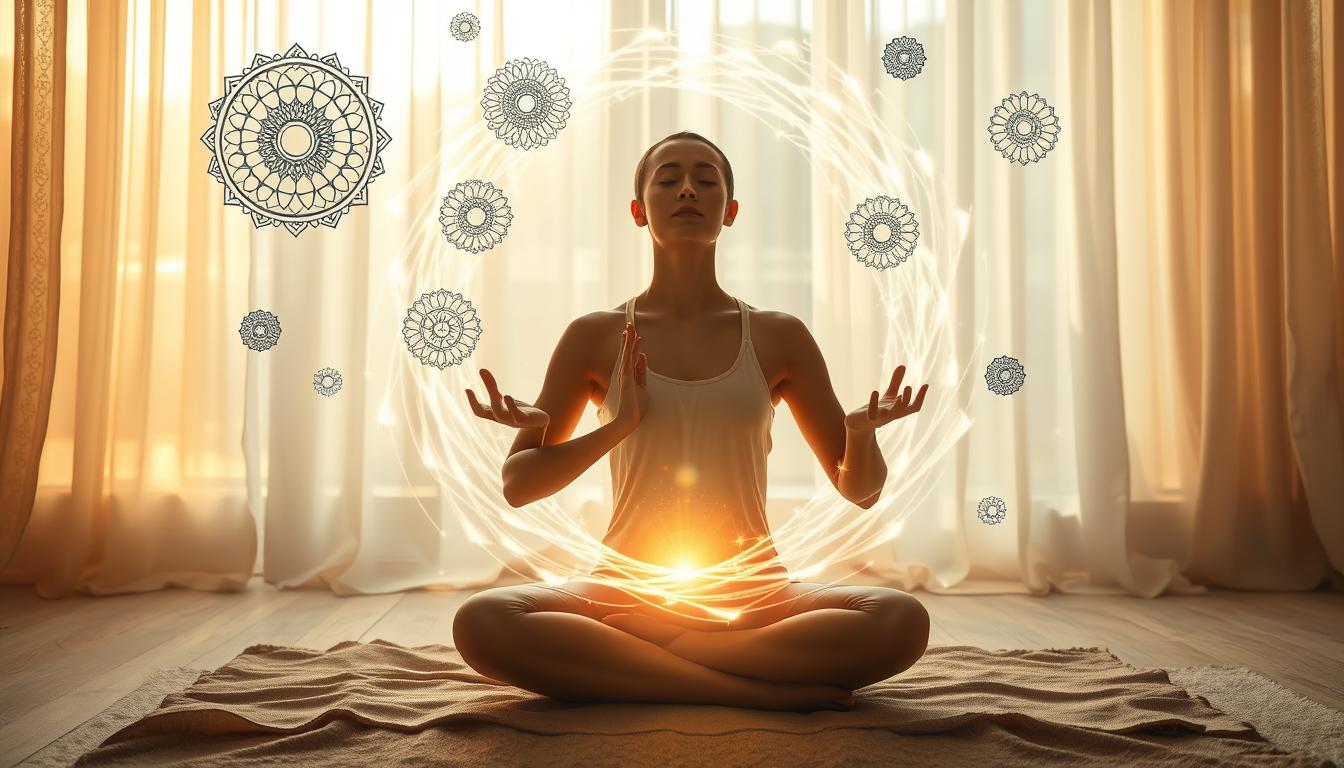
Walking into your first energy session feels like stepping into a sanctuary. Soft light and calming scents greet you as the practitioner guides you to a padded table. They’ll explain how gentle hand placements encourage your body’s natural rhythms—no pressure, just presence.
The Techniques and Sensations During a Session
Your guide hovers hands slightly above or lightly touches areas like your head, shoulders, or abdomen. Many report warmth, tingling, or waves of calm. “It’s like sinking into a warm bath,” one client shared. Others notice emotional releases—tears or laughter bubbling up unexpectedly.
Common experiences include:
- Temperature shifts (coolness or heat)
- Twitches as tension releases
- Vivid colors during closed-eye moments
Creating a Relaxing Healing Environment
Practitioners curate spaces to quiet the mind. Dim lighting, nature sounds, and weighted blankets help you unwind. These details matter—studies show ambient music alone can lower heart rates by 15% during energy work.
Wear loose clothing and hydrate afterward. Reiki healing sessions vary—you might feel energized or need rest. Trust your body’s signals. Each visit builds on the last, revealing layers of ease you didn’t know were possible.
Integrating Reiki as a Complementary Therapy
Modern healthcare thrives when multiple approaches work together. Many hospitals now blend energy-based practices with standard care to address both physical symptoms and emotional well-being. This integration helps patients feel supported on multiple levels during challenging treatments.
Balancing Conventional Medical Treatments
Reiki shines as a partner to mainstream medicine, not a replacement. Over 80 U.S. cancer centers—including Memorial Sloan Kettering—offer it alongside chemotherapy. Patients report better pain management and reduced anxiety when combining these approaches.
Key integration strategies include:
- Scheduling sessions before or after medical procedures
- Using gentle touch to ease post-surgery recovery
- Training nurses in basic techniques for bedside care
Safety, Benefits, and Considerations
As a non-invasive complementary therapy, this practice suits most people. Studies show it may lower blood pressure and improve sleep quality without medication side effects.
Three factors ensure safe integration:
- Choose certified practitioners with healthcare collaboration experience
- Attend sessions in addition to—not instead of—prescribed treatments
- Track changes in symptoms to share with your medical team
By honoring both science and subtle energy, you create a holistic path forward. Your body’s innate wisdom guides the balance between modern medicine and ancient healing arts.
Conclusion
Energy healing at its highest level bridges individual well-being with the greater flow of universal life force. As you’ve discovered, becoming a skilled practitioner involves more than technique—it’s about nurturing intuition and ethical practice. The journey honors traditions rooted in early 20th-century Japan while adapting to modern needs, from hospital settings to personal growth.
Each session offers a space where gentle touch encourages your body’s innate wisdom to emerge. Whether seeking stress relief or deeper balance, these moments create ripples that enhance conventional treatments. Over 60% of medical centers now recognize its value in supporting overall wellness.
Your next step? Explore training programs that emphasize hands-on experience and mentorship. Many find the attunement process—a cornerstone of advanced practice—deepens their connection to force energy in transformative ways. Remember, healing thrives when curiosity meets commitment.
FAQ
How is a master different from a regular practitioner?
Can this practice complement medical treatments?
What role does attunement play in mastery?
How long does it take to reach the highest level?
What sensations might I feel during a session?
Why is Mikao Usui important to this tradition?
Do I need special tools for a healing environment?
Can anyone learn to channel energy?
Q: What is a Reiki Master?
A: A Reiki Master is a highly trained individual who has completed all levels of Reiki training, including the master level. They possess a deep understanding of Reiki energy and can teach and initiate others into the practice of Reiki.
Q: How can I become a Reiki Master?
A: To become a Reiki Master, you first need to be trained as a Reiki practitioner and progress through the various levels of Reiki training. This includes completing the first Reiki levels and then undertaking Reiki Master training, which often involves learning about advanced techniques and symbols.
Q: What are the benefits of Reiki?
A: The benefits of Reiki include reduced stress, pain relief, emotional healing, and overall well-being. It is a form of energy healing that promotes relaxation and balance in the energy field, allowing the body to heal itself more effectively.
Q: How does energy healing work in Reiki?
A: Energy healing works in Reiki by channeling Reiki energy through the hands of the practitioner to the recipient. This process helps to clear blockages in the energy field, facilitating the body’s natural healing processes and promoting a sense of peace and balance.
Q: Can anyone learn about Reiki?
A: Yes, anyone can learn about Reiki and become a Reiki practitioner. There are many resources available, including classes and workshops, that provide the necessary training to understand and practice Reiki effectively.
Q: What should I expect during a Reiki treatment?
A: During a Reiki treatment, you will typically lie down fully clothed while the practitioner lightly touches or hovers their hands over your body. You may feel sensations of warmth or tingling as the healing energy flows, and many people experience deep relaxation during the session.
Q: How do I find a Reiki practitioner?
A: You can find a Reiki practitioner by searching online directories, asking for recommendations from friends or health professionals, or visiting holistic healing centers. It’s important to ensure that the practitioner is certified and has good reviews.
Q: What is the role of a Reiki Master Teacher?
A: A Reiki Master Teacher not only practices Reiki but also teaches others how to use Reiki and become practitioners themselves. They guide students through the learning process and provide the necessary attunements to initiate them into different levels of Reiki.
Q: Can I try Reiki without becoming a practitioner?
A: Absolutely! You can try Reiki by booking a session with a professional Reiki practitioner. This allows you to experience the healing power of Reiki without the need to undergo training.
Q: What is Usui Reiki?
A: Usui Reiki is the original form of Reiki founded by Mikao Usui in Japan. It is the most widely practiced type of energy healing today, and it emphasizes the channeling of Reiki energy to promote healing and well-being.