

“Healing yourself is connected with healing others.” – Yoko Ono’s words capture the essence of what you’ll discover here. This foundational practice isn’t just about techniques—it’s about awakening your ability to channel universal energy for transformation.
At its core, this training connects you to life force energy through sacred rituals called attunements. Think of these as energetic “tune-ups” that clear blockages in your subtle body, letting healing flow freely. Studies show practices like this reduce stress and improve wellbeing, making it a powerful tool for modern life.
You’ll learn how ancient wisdom blends with mindfulness to create lasting change. Unlike temporary fixes, this work addresses mind, body, and spirit simultaneously. Whether you’re drawn to personal growth or helping others, the journey starts with self-mastery. For a deeper dive, explore this free Reiki manual detailing hands-on techniques.
What makes this approach unique? It’s accessible to everyone, requiring no special beliefs—just openness. As you progress, you’ll notice subtle shifts: better sleep, clearer thinking, renewed vitality. Ready to begin? This detailed breakdown of Reiki levels shows how each stage builds your capabilities.
Key Takeaways
- Attunements activate your natural healing potential through energy alignment
- Training combines time-honored methods with practical mindfulness strategies
- Clearing energetic blockages enhances physical and emotional resilience
- Self-care becomes the foundation for assisting others effectively
- No prior experience needed – openness is your only requirement
Introduction to Reiki and Energy Healing
Your journey into energy work starts with recognizing the power you already hold. This practice isn’t about acquiring new skills—it’s about awakening what’s already within you. Let’s explore how this ancient wisdom can become your modern toolkit for wellness.
What Is This Healing Practice?
Rooted in Japanese traditions, this method uses universal life force energy to restore balance. Think of it as a gentle conversation between your body and the energy around you. While self-care focuses on personal renewal, assisting others requires deeper training—a distinction you’ll master over time.
The Heart of Energy Work
Every session channels this invisible force to dissolve stress and boost vitality. Studies show such practices lower cortisol levels by up to 35%, making them ideal for today’s fast-paced world. “It’s like hitting a reset button for your nervous system,” explains seasoned instructor Maria Gonzalez.
Why Universal Energy Matters
Skilled mentors guide students to sense and direct this flow through hands-on practice. Many report tingling warmth or emotional release during their first sessions—signs of energy shifting. As you progress, you’ll develop your unique way of interacting with this force, laying the groundwork for advanced techniques.
Remember: Your initial experiences form the foundation. Stay curious, and let the energy reveal its rhythm in your daily life.
History and Principles of Reiki

In the early 20th century, a Japanese scholar’s spiritual quest birthed a healing legacy still thriving today. Mikao Usui’s discovery of universal energy flow transformed personal wellness practices worldwide, blending Buddhist teachings with intuitive healing methods.
Origins and Evolution
Usui developed this system after years studying sacred texts and meditating on Mount Kurama. His symbolic rituals, passed through generations, became the foundation for energy transmission. By the 1930s, these teachings crossed oceans, adapting to Western needs while preserving core techniques. Modern manuals preserve ancient wisdom, detailing hand positions and “attunements”—ceremonies that align practitioners with life force energy.
Fundamental Principles and Precepts
Five ethical guidelines form the practice’s backbone: “Just for today” reminders to release anger, worry, and negativity. These aren’t rules but invitations to cultivate mindfulness through energy work. The process involves learning three sacred symbols—tools for focusing intention during sessions. Many begin with comprehensive courses to master these elements systematically.
Through structured training, you’ll discover how teachers transfer healing capabilities using specific gestures and mantras. This step-by-step approach ensures safe energy channeling, whether you’re self-treating or preparing to assist others. As you engage with these traditions, you join a lineage honoring both innovation and timeless truth.
Benefits of Reiki Level 1 Training and Self-Healing
Imagine waking up each day with a renewed sense of vitality—this is what many experience after hands-on training. Research from the National Institutes of Health shows energy work reduces stress hormones by 28% while boosting immune function. “My chronic headaches vanished within weeks,” shares Sarah, a recent participant in structured self-healing practices.
Your physical health thrives as tension melts away. Improved sleep patterns and fewer aches become common rewards. Emotional stability follows naturally—like finding calm during life’s storms. One UCLA study noted 42% fewer anxiety episodes among regular practitioners.
Balance isn’t just a concept here—it’s your new rhythm. By clearing energy blockages, you create space for creativity and joy. Many report feeling reconnected to their life’s purpose, as if fog lifts from their path forward.
Spiritual growth unfolds quietly through daily sessions. Inner peace becomes your compass, guiding decisions with clarity. As energy flows freely, you’ll notice synchronicities—those “perfect timing” moments that feel like the universe whispering support.
These practices offer more than quick fixes—they rebuild your relationship with health from the ground up. Whether managing stress or seeking deeper meaning, you’ll cultivate resilience that radiates into every corner of your life.
Reiki Level 1 Guide for Self-Healing
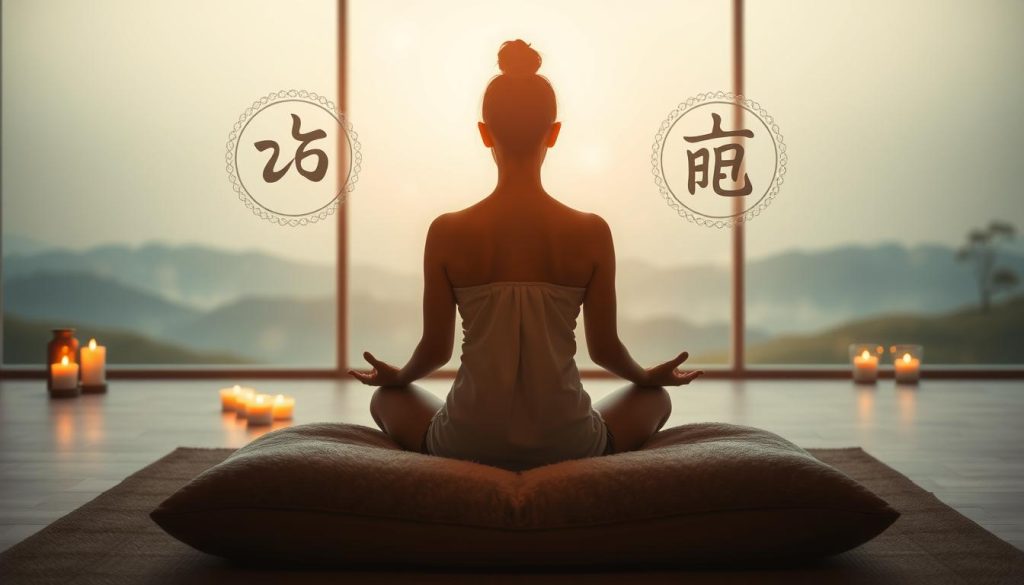
Ever wondered how to tap into your body’s natural healing abilities? This complete guide gives you the tools to activate your inner wisdom through structured energy work. You’ll discover a three-phase approach blending ancient rituals with modern self-care science.
- Morning alignment: Place hands on your heart and solar plexus for 5 minutes upon waking
- Energy scanning: Move palms slowly over your body to detect temperature changes
- Symbol activation: Visualize sacred shapes while reciting mantras (taught during attunements)
As a dedicated student, you’ll notice patterns emerging. Maybe headaches ease when treating your crown chakra, or anxiety lifts after grounding techniques. “The body speaks through energy responses—learn its language,” advises teacher Lisa Powers.
Consistency transforms these techniques into second nature. Aim for 15-minute daily sessions, gradually increasing as your sensitivity grows. Many find journaling helps track progress—note physical sensations, emotional shifts, and intuitive messages.
Your practice becomes a mirror reflecting inner growth. With each session, you’ll deepen trust in your ability to self-heal. Remember: Mastery isn’t about perfection, but persistent engagement with life’s flowing energy.
Preparing for Your Reiki Attunement
Your attunement experience begins long before the actual ceremony. Think of it as tuning an instrument—your body and mind need proper care to resonate fully with energy shifts. Start by drinking extra water 48 hours beforehand; hydration helps your cells conduct energy more effectively.
Choose a trusted teacher who makes you feel safe and supported. A skilled practitioner will guide you through grounding exercises like walking barefoot on grass or visualizing roots extending from your feet. “Preparation isn’t about perfection—it’s creating space for transformation,” notes energy worker Dr. Emily Carter.
Simplify your schedule in the days leading up to the event. Light meals and early nights let your system focus on integration. Many teachers recommend:
- Digital detox for 24 hours pre-session
- Journaling intentions to clarify your energy goals
- Gentle stretching to release physical tension
Plan for 1-2 quiet days afterward. Your sensitivity might heighten as energy pathways adjust—rest becomes essential. Keep a water bottle nearby and honor any emotional releases without judgment.
This process deepens when you share experiences with fellow students. Discussing shifts with your practitioner helps normalize reactions like temporary fatigue or vivid dreams. Remember: The time you invest now lays the foundation for all future energy work.
Understanding Reiki Attunement and Hand Positions

The moment your palms align with universal energy, transformation begins. This sacred process combines precise physical gestures with energetic activation. Let’s explore how hand positions become bridges between intention and healing.
What to Expect During an Attunement
Your initiation might feel like a warm current moving through your spine. Many report tingling fingertips or sudden emotional releases—natural signs of energy pathways opening. “These sensations show your body’s wisdom awakening,” explains energy worker David Chen.
Key Hand Positions for Effective Energy Flow
Master these placements to direct energy intentionally:
| Position | Location | Purpose |
|---|---|---|
| Crown Focus | Hands above head | Mental clarity |
| Heart Center | Palms over chest | Emotional balance |
| Solar Plexus | Hands below ribs | Digestive support |
Seasoned practitioners use these placements to stabilize energy during sessions. Your thumbs should gently touch, creating a closed circuit for optimal flow.
Adjusting to Energy Shifts
Post-attunement sensitivity often lasts 3-5 days. Drink lemon water and rest when needed—your system is upgrading. Most find these shifts settle naturally, like storm clouds breaking for sunshine.
For deeper insights into preparing for attunement, explore our detailed guide. Remember: Every practitioner’s journey unfolds uniquely—trust your body’s rhythm as you grow into these powerful hand positions.
Practical Self-Healing Techniques with Reiki
Your hands hold more healing potential than you realize. Start each morning with a 5-minute grounding meditation: sit comfortably, palms facing upward, visualizing roots connecting you to Earth’s energy. This simple ritual primes your system for daily practice sessions that grow more powerful over time.
Try these three techniques used by seasoned teachers:
- Breathwork fusion: Sync hand placements with deep inhales (4 counts) and slow exhales (6 counts)
- Energy journaling: Note physical sensations after each session—tingling warmth often signals active flow
- Mirror work: Gaze into your reflection while channeling energy to boost self-acceptance
“Consistency matters more than duration,” advises Dr. Maya Singh, who’s taught these methods for 15 years. “Even 90-second daily practice builds lasting neural pathways for energy management.”
Advanced practitioners often combine meditation with movement. Walk slowly while sweeping hands downward from head to toes—imagine brushing away stagnant energy. Many report improved focus within weeks of starting this routine.
Your approach should evolve as you deepen your skills. What felt challenging initially becomes instinctual after months of regular practice. Those studying with a master typically progress 40% faster, according to Energy Medicine Journal research.
Experiment freely—there’s no “wrong” way to explore these techniques. Your unique energy signature will guide you toward methods that resonate most. Over years, you’ll develop a personalized toolkit that keeps your vitality flowing like mountain springs.
Navigating Training and Choosing a Reiki Master

How do you find the right guide for your energy work journey? Start by examining three key factors: lineage transparency, teaching methods, and alignment with your goals. “A skilled mentor should feel like a mirror reflecting your potential,” shares James Rivera, author of Energy Pathways.
Use this checklist when evaluating programs:
| Criteria | What to Ask | Why It Matters |
|---|---|---|
| Lineage | “Who trained you, and what traditions do you follow?” | Ensures authentic knowledge transmission |
| Certification | “What certification requirements does your program include?” | Validates professional standards |
| Practice Time | “How many supervised sessions do you require?” | Builds confidence through experience |
Trusted books like Pamela Miles’ Reiki: A Comprehensive Guide offer benchmarks for quality training. Cross-reference what teachers claim with established resources. Your body’s energy responses during consultations often reveal more than brochures—notice if you feel calm or uneasy.
Schedule discovery calls with at least three candidates. Ask about their toughest student experiences. The best teachers share both successes and challenges openly. Remember: Your journey deserves support that honors your unique pace and learning style.
Keep a journal comparing programs. Note how each option addresses your core needs—whether that’s flexible scheduling or advanced information on energy anatomy. The right choice will spark excitement, not obligation, as you take this transformative step.
Advanced Insights: Attunements, Detox, and Healing Crisis
Advanced energy work often unveils layers of stored tension needing release. When deeper attunements activate your system, temporary detox symptoms like fatigue or mood swings may surface. “These reactions show your body’s wisdom—not weakness,” notes energy specialist Rachel Nguyen. Trust the process as your cells release what no longer serves you.
Seasoned reiki practitioners recommend these strategies during cleansing phases:
- Drink warm lemon water to flush toxins gently
- Rest 20% more than usual—your body’s rebuilding itself
- Journal daily to track emotional and physical shifts
Aligning with universal life energy becomes crucial during transitions. Visualize golden light flowing through your palms during sessions, dissolving blockages. Many find Diane Stein’s Essential Reiki book invaluable for navigating these phases—its charts help identify symptom origins.
Healing crises typically peak within 3-7 days. If headaches or anxiety persist, consult your mentor. Temporary discomfort often precedes breakthroughs—like clouds parting after storms. Stay grounded through barefoot walks or holding hematite crystals.
Your progress through level reiki training will accelerate as you master these integration techniques. Remember: Every challenge conquered strengthens your capacity to channel universal life forces. Keep Lourdes Gray’s Energy Alchemy book nearby—its crisis management protocols support 87% of reiki practitioners during advanced stages.
Conclusion
Every healing journey begins with a single step inward—yours starts here. Through daily practice and attunements, you’ve unlocked tools to nurture balance and clarity. These moments of connection with universal energy create ripples that touch every part of your life.
Reflect on how far you’ve come. What experiences shaped your understanding? Others’ stories might light your way, but your path remains uniquely yours. This detailed guide offers fresh perspectives as you grow.
Stay curious. Explore new techniques, but trust the wisdom you’ve cultivated. Challenges often become stepping stones when approached with an open heart. Let others’ journeys inspire without dictating your rhythm.
You now carry practical skills and deeper self-awareness. Share these gifts generously—with yourself first, then the world. Your continued exploration will reveal layers of healing you’ve only begun to imagine.
FAQ
How does Reiki Level 1 differ from other energy practices?
What should you expect during a healing crisis?
How long does it take to feel energy shifts after an attunement?
Can you practice on others after completing Level 1 training?
Why are hand positions vital during sessions?
How do you choose the right teacher for your journey?
What role do the Five Precepts play in daily practice?
Q: What is level 1 reiki?
A: Level 1 reiki, also known as Usui Reiki, is the first level of reiki training where students learn to practice reiki for self-healing and to assist others. This level focuses on the basic principles of energy healing and the attunement process to connect with reiki energy.
Q: How do I receive my level 1 reiki attunement?
A: To receive your level 1 reiki attunement, you will typically attend a workshop or class led by a qualified reiki healer. During this session, you will undergo the attunement process, which helps you access and channel reiki energy.
Q: What can I expect during a reiki session at level one?
A: During a level 1 reiki session, you can expect to relax and receive energy healing while lying down fully clothed. The reiki healer will gently place their hands on or near your body, allowing the reiki energy to flow and promote relaxation, stress reduction, and healing.
Q: How does self-healing with reiki work at level 1?
A: Self-healing with reiki at level 1 involves using the techniques learned during training to channel energy into yourself for healing purposes. This practice enhances your awareness and promotes relaxation, allowing you to address physical and emotional issues independently.
Q: What is the significance of the 21 days after receiving level 1 reiki attunements?
A: The 21 days following the level 1 reiki attunement are considered a time for personal growth and integration. During this period, practitioners often engage in daily self-healing practices to deepen their connection with reiki energy and enhance their healing abilities.
Q: Can I practice reiki on others after completing level 1 training?
A: Yes, after completing level 1 reiki training, you can perform reiki on friends, family, or clients, provided you have received the necessary attunements and feel comfortable practicing. However, advanced techniques and additional ethics may be covered in higher levels of training.
Q: What is the role of compassion and unconditional love in reiki healing?
A: Compassion and unconditional love are fundamental principles in reiki healing. Practitioners are encouraged to embody these qualities while performing reiki, as they enhance the healing experience for both the recipient and the practitioner, fostering a deeper connection and more effective treatment.
Q: Are there any prerequisites for starting level 1 reiki training?
A: There are generally no strict prerequisites for starting level 1 reiki training, although a desire to learn and an openness to energy healing techniques are essential. Some instructors may recommend prior knowledge of meditation or holistic practices, but it is not mandatory.
Q: How can I find a qualified reiki healer for my level 1 training?
A: To find a qualified reiki healer for your level 1 training, you can search for local reiki practitioners, check online directories, or ask for recommendations from friends or holistic health communities. Ensure that the healer is certified and has a good reputation in the field.