

“Energy is the currency of the universe. When you tap into it consciously, you become a conduit for transformation.” – Deepak Chopra’s words capture the essence of Reiki’s journey. Whether you’re new to energy work or ready to deepen your practice, understanding the progression of these stages unlocks profound healing potential.
In the first stage of training, you’ll focus on self-healing and foundational techniques. This phase clears blockages in your own energy field, teaching you to channel universal life force through hands-on practice. Many describe this as awakening an inner compass—one that guides both personal growth and your ability to support others.
Advancing to the next stage introduces tools like sacred symbols and methods to transcend physical boundaries. Here, you’ll learn to send healing across time and space, a skill highlighted in resources like advanced Reiki training guides. The shift isn’t just about techniques; it’s a refinement of how you perceive and direct energy.
Quality guidance matters at every step. As noted in mastering Reiki practices, a skilled teacher helps you navigate attunements—ceremonies that amplify your connection to universal energy. These milestones aren’t just lessons; they’re doorways to becoming a more intentional healer.
Key Takeaways
- Foundational training prioritizes self-healing and energy awareness
- Sacred symbols unlock advanced methods like distance healing
- Attunements deepen your connection to universal life force
- Daily practice builds confidence in channeling energy
- Teacher mentorship ensures safe and effective skill development
Understanding Reiki: An Introduction for Your Journey
“The secret of inviting happiness through many blessings is embedded in Reiki’s wisdom.” This teaching from Mikao Usui, Reiki’s founder, reveals why this practice remains vital today. At its core, Reiki helps you harmonize your life force with universal energy—a concept explored in Reiki’s three stages.
The Role of Universal Energy in Healing
Everything alive carries ki—the Japanese term for life force energy. When blockages disrupt this flow, imbalances arise. Reiki training teaches you to sense and direct this energy through light touch or intention. Your first attunement acts like tuning a radio: it sharpens your ability to receive and transmit healing frequencies.
| Energy Flow | Physical Effect | Emotional Impact |
|---|---|---|
| Balanced | Improved sleep | Calm mindset |
| Restricted | Tension | Anxiety |
| Enhanced | Faster recovery | Clarity |
Embracing Your Path to Wellness
Early attunements awaken your inner healer. Many students report tingling hands or warmth during sessions—signs of energy activation. Daily self-practice builds this sensitivity. Start with five minutes each morning: place palms over your heart, breathe deeply, and visualize light filling your body.
As your connection grows, you’ll naturally extend healing to others. One practitioner shares: “Reiki didn’t just change my routine—it reshaped how I experience every moment.” This journey requires patience, but each step brings deeper alignment with life’s rhythmic flow.
difference between reiki level 1 and 2
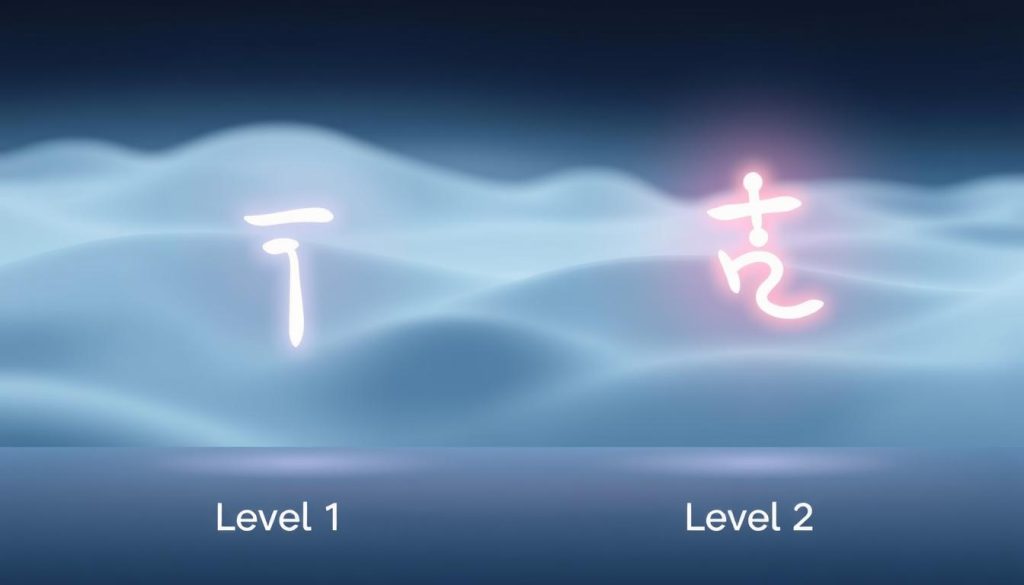
Your journey through Reiki evolves through distinct phases, each unlocking new layers of healing potential. The initial stage grounds you in personal energy work, while subsequent training expands your capacity to support others.
What Each Level Offers in Terms of Healing
Stage one focuses on self-mastery. You learn hand placements for physical healing and develop sensitivity to energy flow. Daily sessions strengthen your connection to universal life force—like building muscles for spiritual fitness.
Advanced training introduces tools that transcend physical touch. Sacred symbols become your allies, enabling you to send healing across rooms or continents. This phase, detailed in Reiki training resources, transforms you from local healer to cosmic conduit.
| Aspect | Stage 1 | Stage 2 |
|---|---|---|
| Focus | Self-healing | Distance techniques |
| Tools | Hands-on practice | Sacred symbols |
| Attunement | Energy activation | Symbol empowerment |
How Attunements Enhance Your Experience
These sacred rituals act as spiritual upgrades. Your first attunement opens energy channels—like unlocking a dormant app. The second installs “symbol software” that amplifies your healing reach.
A skilled teacher tailors these ceremonies to your growth pace. One practitioner shares: “My mentor’s guidance helped me trust the symbols’ power—even when logic doubted.” Regular practice Reiki sessions then integrate these upgrades into your daily life.
Whether you’re drawn to personal healing or professional practice, each stage builds confidence. Trust the process—your energy awareness grows exactly when needed.
Key Components of Reiki Level 1 Training

Your first steps in Reiki training awaken a profound connection to life force energy. This foundation prepares you to become both recipient and channel of healing vibrations.
Basic Attunements and Energy Sensitivity
During your initial attunement ceremony, a Reiki teacher activates your subtle body’s energy pathways. Many students describe this as feeling like “liquid sunlight” flowing through their hands. These sacred rituals, detailed in the Reiki attunement process, align your chakras and enhance intuitive awareness.
| Element | Purpose | Outcome |
|---|---|---|
| Attunements | Open energy channels | Heightened sensitivity |
| Breathwork | Grounding practice | Centered presence |
| Hand positions | Energy direction | Effective self-care |
Hands-On Practice and Self-Healing Techniques
Daily sessions teach you to scan your body for energy blockages. Start with 10-minute practices: place palms on your heart and solar plexus while visualizing healing light. Over 21 days, this routine builds muscle memory for energy flow management.
Your teacher will demonstrate proper hand placements for common issues like headaches or fatigue. One student shared: “The symbols we learned became my anchors—reminders that healing starts within.” Consistent practice turns these techniques into second nature, preparing you for advanced training.
Deep Dive Into Reiki Level 2: Practices and Attunements

Your evolution as a healer takes a quantum leap in this stage. Advanced training introduces tools that transform how you interact with energy, empowering you to support others beyond physical limitations.
Exploring Sacred Symbols and Mantras
Three sacred symbols become your allies here. The Cho Ku Rei amplifies energy flow, while Hon Sha Ze Sho Nen bridges time and space. These aren’t just shapes—they’re vibrational keys that focus intention like a laser beam.
| Symbol | Purpose | Common Use |
|---|---|---|
| Cho Ku Rei | Power boost | Localized healing |
| Sei He Ki | Emotional balance | Mental clarity |
| Hon Sha Ze Sho Nen | Distance connection | Remote sessions |
Distance Healing and Advanced Techniques
Imagine sending relief to a friend across the globe. Through distance healing certification, you’ll learn to use photographs or mental focus as energetic bridges. One practitioner describes it as “turning your heart into a Wi-Fi router for universal energy.”
| Technique | Tool | Benefit |
|---|---|---|
| Beaming | Symbols + intention | Non-local healing |
| Scanning | Energy awareness | Blockage detection |
| Charging | Visualization | Object empowerment |
Your teacher will guide you through secondary attunements that deepen your resonance with these methods. Regular practice builds confidence—soon, you’ll intuitively know which symbol to use, even during complex sessions.
Comparing Energy, Practice, and Intuition Across Levels

Your hands tingle differently now—a sign your energy awareness is maturing. Early training taught you to sense life force within; advanced work lets you sculpt it like clay. This evolution transforms how you interact with everything from morning routines to complex healing sessions.
From Sensory Exploration to Creative Flow
Beginners often describe energy as warmth or vibration during self-healing. After attunements, these sensations become precise messages. One student shares: “I now feel energy as colors—red for blockages, gold for balanced flow.”
| Aspect | Foundational Work | Master-Level Skills |
|---|---|---|
| Focus | Personal balance | Creative application |
| Intuitive Markers | Physical sensations | Visual/emotional cues |
| Practice Time | Daily 10-minute sessions | Integrated lifestyle |
Consistent practice acts as your compass. What began as structured hand positions becomes fluid intuition. Teachers often observe students “outgrowing” techniques as their connection to universal energy deepens.
Mentorship accelerates this growth. A skilled teacher helps decode subtle energy shifts you might miss. As one practitioner notes: “My mentor showed me how to trust fleeting impressions—those became my most powerful guidance.”
This journey isn’t linear. Some days energy flows like rivers; others feel like mist. Each phase builds resilience, preparing you to hold space for others’ transformations while honoring your own rhythm.
Conclusion
Your growth as a healer unfolds through intentional steps. Initial training roots you in self-care, while advanced work empowers you to support others beyond physical limits. Each phase builds on the last—like learning to swim before diving into deep waters.
Proper attunements act as bridges, connecting you to universal energy more deeply with each level. Teachers guide this process, helping you trust subtle shifts in perception. For a comprehensive comparison of these stages, explore trusted resources that honor Reiki’s traditions.
Consistent practice turns techniques into instinct. Whether you’re drawing sacred symbols or sending healing across miles, repetition strengthens your connection. This journey isn’t about rushing—it’s about letting each lesson shape your daily life.
Stay curious. Attend workshops, exchange sessions with peers, and revisit foundational skills. As your confidence grows, so will your ability to share this gift. The path never truly ends—it simply reveals new ways to harmonize with life’s flowing energy.
FAQ
How long should I wait between Reiki Level 1 and Level 2 training?
Can I practice on others after completing Reiki Level 1?
What makes Level 2 attunements different from Level 1?
Do I need to memorize symbols in Reiki Level 2?
Can Reiki Level 2 help with emotional or past traumas?
Is there a certification process for each Reiki level?
How does distance healing work in Level 2?
What if I don’t want to become a Reiki master—is Level 2 still valuable?
Q: What is the difference between Reiki Level 1 and Reiki Level 2?
A: Reiki Level 1 focuses on self-healing and basic techniques, while Reiki Level 2 introduces advanced techniques, including the use of symbols and the ability to send Reiki energy over distance.
Q: What does the attunement process involve for Level 2?
A: The Level 2 attunement involves a ceremony where the teacher helps the student to access and channel Reiki energy more effectively, allowing them to use symbols and enhance their healing abilities.
Q: Can I become a Reiki practitioner after Level 1?
A: Yes, after completing the Reiki Level 1 attunement, you can begin practicing Reiki on yourself and others, although Level 2 training is required for more advanced practices.
Q: What are the main skills learned in Reiki Level 2?
A: In Reiki Level 2, you learn how to use Reiki symbols, perform distant healing, and deepen your understanding of Reiki energy, which allows you to heal others more effectively.
Q: How many attunements are required for each level of Reiki?
A: Typically, one attunement is required for Reiki Level 1, while Level 2 also requires a single attunement. For those pursuing Reiki Level 3 or master level, a master attunement is required.
Q: What is the significance of Reiki symbols in Level 2?
A: Reiki symbols are powerful tools that help practitioners focus their intention and energy, allowing them to enhance their healing practice and perform distant healing techniques.
Q: What is Level 3 in the context of Reiki training?
A: Level 3, also known as the Reiki Master level, is for those who wish to teach Reiki and attune others. It involves advanced techniques and a deeper understanding of the energy of Reiki.
Q: Can I send Reiki energy without being attuned to Level 2?
A: While you can send Reiki energy after receiving a Reiki Level 1 attunement, Level 2 training enhances your ability to send Reiki more effectively and over distances.
Q: What is involved in receiving a Reiki Level 2 attunement?
A: Receiving a Reiki Level 2 attunement typically involves a ceremony conducted by a Reiki master, where the student is attuned to higher frequencies of Reiki energy and learns to use symbols.
Q: How can I find a qualified Reiki master for my training?
A: Look for recommendations from other practitioners, check reviews online, and ensure that the teacher is certified and has experience teaching the three levels of Reiki.