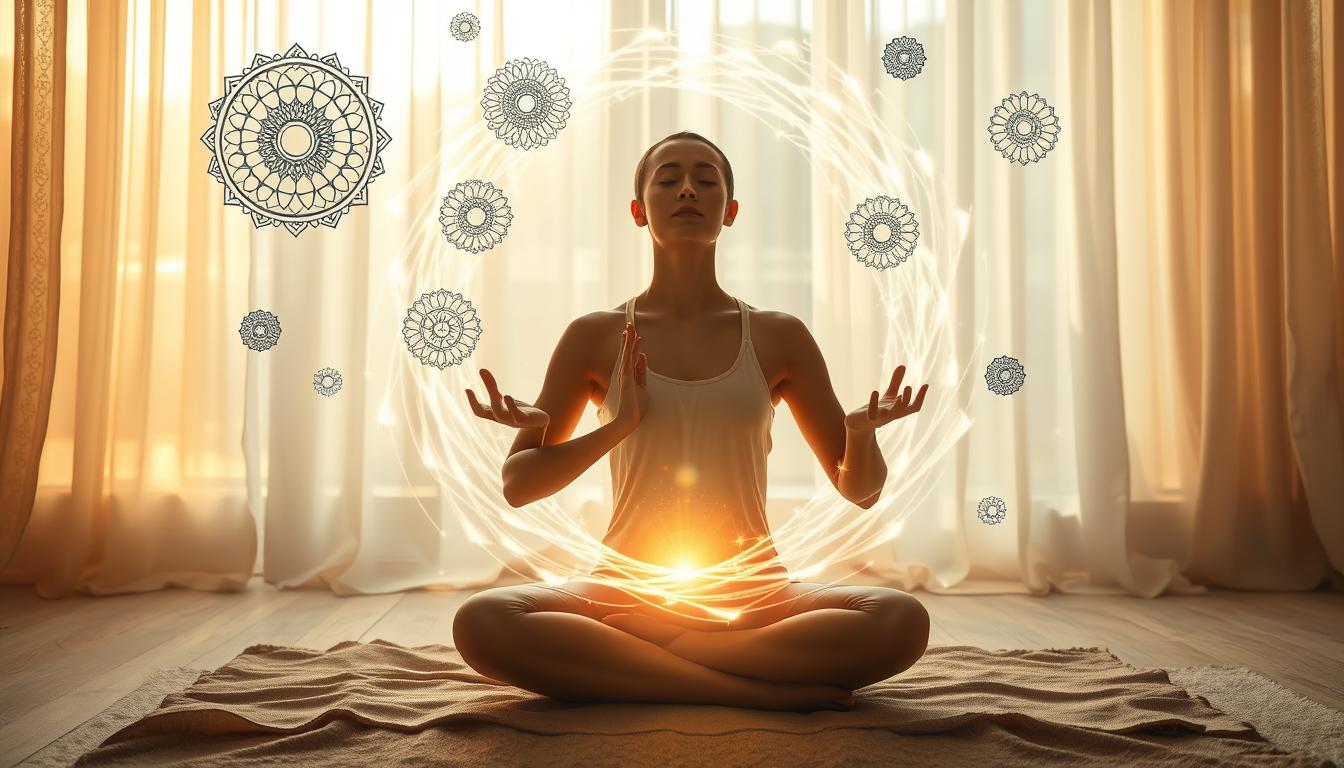

I’ve spent years mastering self-Reiki, and it’s changed my life. This guide will show you how to tap into universal life force energy by yourself. It helps with stress, focus, and balancing your chakras, giving you control over your healing.
Your hands can dissolve tension and renew your energy. This guide teaches you to channel Reiki energy through self-massage, setting intentions, and breathwork. These techniques are easy to fit into your busy life, combining ancient wisdom with modern science.
Key Takeaways
- Learn 3 core hand positions to address common energy blockages
- Discover how daily self-Reiki reduces anxiety and improves sleep patterns
- Master grounding methods to balance your body’s energy fields
- Understand Reiki’s principles through practical exercises
- Access free guided meditations to enhance your self-reiki practice
Introduction to Self Reiki Guide
Self-Reiki is a way to heal yourself. It comes from Japanese tradition and helps balance your energy. Let’s explore how it works and why it’s important.
What Is Self Reiki and How Does It Work?
Reiki comes from rei (universal) and ki (life energy) in Japanese. It’s believed that blocked energy leads to imbalance. Practitioners use their hands to channel energy and help heal.
“The secret art of inviting happiness lies in balancing the body’s energy flow.”
The Difference Between Receiving Self Reiki and Self-Practice
Getting Reiki from a pro means someone else does the work. But self-practice lets you take charge. Here’s a quick comparison:
| Aspect | Professional Session | Self-Practice |
|---|---|---|
| Convenience | Requires appointments | Available anytime |
| Cost | Payment per session | Free after learning |
| Frequency | Limited by availability | Practice daily |
Why Learning Self-Reiki Is Valuable for Your Wellness Journey
- Get self reiki benefits like less stress and better focus anytime.
- Make a routine that’s just for you, without needing others.
- Grow more mindful with regular energy healing.
Self-Reiki gives you the power to heal yourself. It’s a tool for your wellness journey.
My Personal Journey with Self-Reiki Practices
My first time with self-Reiki was during a stressful work period. I was skeptical but needed calm, so I looked into self-reiki practice online. It turned out to be a game-changer.
“I didn’t believe energy healing could change my life until I tried it myself,”
Months later, I saw real changes. At first, sitting for 20 minutes was tough. But, my long-time tension headaches started to fade.
One key moment was during a family crisis. Instead of medication, I used self-reiki treatment. Just placing my hands on my heart and breathing deeply calmed me down quickly. These small wins helped me trust the practice more.
My biggest challenge was staying consistent. I made a 3-step routine: morning meditation, midday checks, and evening reflection. I even started a journal to track my progress. After 6 weeks, my insomnia improved.
- Started with 5-minute daily sessions
- Observed physical/emotional shifts within 3 months
- Now integrate Reiki into monthly self-care rituals
Now, self-Reiki is more than a tool—it’s a way to talk to my energy. It’s real, not magic. My journey shows how anyone can turn skepticism into power with self-reiki.
Understanding the Principles of Self-Reiki
Reiki self healing is based on key principles and energy awareness. These elements guide how energy moves during your practice. Let’s explore the main concepts that help deepen your self-healing journey.
The Five Reiki Principles and Their Meaning
Michio Usui’s five principles help change your mindset daily. They improve your energy work. Here’s how they work:
- Just for today, I will not worry. — This helps clear mental blocks.
- Just for today, I will not be angry. — It removes emotional stagnation.
- Just for today, I will be grateful. — It boosts positive vibes.
- Just for today, I will do my work honestly. — It keeps actions true to integrity.
- Just for today, I will be kind to every living thing. — It fosters compassion and balance.

Energy Centers: Understanding Your Chakras
Your seven main chakras are energy centers. Balancing them is essential for reiki self healing. Here’s a quick guide:
| Chakra | Location | Color | Aspect |
|---|---|---|---|
| Root | Base of spine | Red | Grounding, safety |
| Sacral | Lower abdomen | Orange | Creativity, desires |
| Solar Plexus | Upper abdomen | Yellow | Confidence, willpower |
| Heart | Center of chest | Green | Love, compassion |
| Throat | Throat | Blue | Communication, truth |
| Third Eye | Brow | Indigo | Intuition, clarity |
| Crown | Top of head | Purple | Spiritual connection |
Setting Intentions for Your Self-Healing Practice
Intentions guide your energy work. For example:
- Physical healing: “I release tension in my shoulders.”
- Emotional balance: “I welcome calmness into my heart chakra.”
- Stress reduction: “I align my energy with calm focus.”
These statements help direct energy toward specific goals. This makes your self healing more focused.
Preparing Your Space for a Self-Reiki Session
Creating a special space for self-reiki meditation is important. Your environment is key for focused energy work. Start by picking a quiet spot where you feel safe and calm. These steps turn any space into a place for self care.
Creating a Sacred and Comfortable Environment
First, adjust the lighting to a soft glow with candles or dim lamps. The temperature should be just right, not too hot or cold. Here are some tips to make your space perfect:
- Minimize noise with noise-cancelling headphones or calming nature sounds
- Clear clutter to reduce mental static
- Use aromatherapy oils like lavender or sandalwood
Essential Tools for Your Self-Reiki Practice
You don’t need much, but these items can make your practice better:
| Tool | Purpose | Example |
|---|---|---|
| Cushions/Blankets | Support comfortable posture | Zafu meditation cushion |
| Journal | Track progress and insights | Spiral-bound notebook |
| Crystals | Strengthen energy flow | Clear quartz or amethyst clusters |
Grounding Techniques Before You Begin
Before you start, follow these three steps:
- Inhale deeply through your nose for 4 counts
- Hold breath 4 seconds, then exhale slowly for 6 counts
- Visualize roots growing from your feet into the Earth
“A grounded space becomes an anchor for your energy field,” says Dr. Jane Lin, a certified Reiki master.
These steps prepare your body and mind for Reiki’s benefits.
Self-Reiki Guide: Essential Hand Positions
Learning the right hand positions is key to effective self-reiki. This guide shows you how to place your hands for energy flow and specific needs. Practice each for 3–5 minutes, keeping soft pressure without tension.
Head and Face Positions for Mental Clarity
Begin with your palms on your crown, then move them to your forehead. For temple pressure, place your fingertips at the temples to ease headaches. Finish by placing your palms below the jawline to release tension.
Heart and Solar Plexus Techniques for Emotional Healing
Place one hand over your heart and the other on your solar plexus. This balances emotions and boosts confidence. For grief, focus longer on the heart area.
Lower Body Positions for Grounding and Physical Healing
- Abdomen: Hands on the belly for digestion issues
- Hips: Palms on each hip bone to release stored stress
- Feet: Cradle each foot for 5 minutes to stabilize energy
Adapting Hand Positions for Your Specific Needs
I adjust positions based on daily challenges. For headaches, add extra time on the temples. For insomnia, focus on the crown and feet. Listen to your body’s signals—adjusting positions strengthens the self-reiki guide’s benefits.
Common Energy Blocks and How to Clear Them
Energy blocks can slow down your self healing techniques progress. You might feel tingling, cold spots, or pain in areas like the chest or shoulders. These signs often mean there’s congestion.
These blocks can come from emotional wounds, stress, or physical strain. Recognizing these signs is the first step to fixing them.
- Signs to watch for: Numbness, recurring pain, or emotional numbness
- Common causes: Unprocessed grief, posture habits, or unresolved conflicts

| Block Type | Solutions |
|---|---|
| Emotional stagnation | Breathwork + visualizing light dissolving tension |
| Physical tension | Extended hand positions over the affected area |
| Mental blocks | Combining affirmations with Reiki flow |
A self healing techniques routine works best with patience. For example, chronic shoulder tightness might need weekly sessions. I’ve seen clients release old fears by repeating “I am safe” during heart center treatments.
Energy shifts aren’t always quick. Trust the process.
“Blocks are opportunities for deeper healing,” says energy healer Maria Lopez in her 2022 guide. “They reveal where your body needs attention most.”
My journey taught me to tackle blocks with curiosity, not frustration. Adding these energy healing practices to your routine builds resilience. Remember, it’s consistent care, not perfection, that speeds up progress.
Incorporating Self-Reiki into Your Daily Routine
Adding self-reiki to your day doesn’t need big changes. Just 5 minutes a day can make a big difference. Try linking it to things you already do, like brushing your teeth or making coffee.
- Mornings: Start with a 5-minute hand sequence while enjoying tea.
- Lunch breaks: Do a quick heart-center technique at your desk to refocus.
- Evenings: End the day with 10 minutes of grounding positions during skincare.
When time is tight, get creative. A 2-minute palm hold during TV ads or a deep breath cycle while waiting for the elevator works. My routine changed from 30 minutes to 5 minutes when I’m on the go. Being flexible is important.
| Time Frame | Example | Benefits |
|---|---|---|
| 5 minutes | Single hand position + breathwork | Quick stress relief |
| 15 minutes | Full body scan with chakra focus | Emotional recalibration |
| 30+ minutes | Guided meditation + full hand position sequence | Deep physical/emotional renewal |
Keep track of your progress easily: write 1-2 sentences in a phone note after each session. Seeing better sleep or less tension helps you stay committed. Mix self-reiki with other self care like journaling or drinking water to build strong wellness habits.
Enhancing Your Practice with Complementary Techniques
Deepen your self-reiki practice by blending it with other modalities. Techniques like meditation or sound therapy can heighten focus and energy flow. This amplifies the self reiki benefits you achieve.
Combining Meditation with Self-Reiki Sessions
Start self reiki meditation by sitting quietly for five minutes before hand positions. Focus on your breath to calm your mind. Pair each hand position with a guided visualization, like imagining golden light during heart chakra work.
This combo sharpens your intention and energy sensitivity.
- Visualize white light during third eye work for clarity
- Use deep breathing to align with heart chakra sessions
Using Crystals to Amplify Your Self-Healing Energy
Crystals act as energy conductors. Place them on key areas while doing hand positions:
| Crystal | Purpose | Placement |
|---|---|---|
| Amethyst | Spiritual awareness | Crown chakra |
| Rose Quartz | Heart healing | Over the heart |
| Citrine | Energy boost | Lower abdomen |
Sound Therapy and Affirmations During Self-Reiki
“Sound waves and words shape energy pathways during sessions.”
Play singing bowls or binaural beats at 528Hz to align chakras. Pair with short affirmations like “I release fear; I embrace peace” during hand positions. Repeat affirmations aloud to reinforce intentions, boosting the self reiki benefits of each session.
Conclusion
Every self-reiki session helps you understand your body’s needs better. This guide shows how simple hand positions and mindful intention can unlock energy flow. Whether using crystals, meditating, or focusing on chakras, the key is to trust your intuition and practice regularly. Reiki self-healing is about being present, not perfect.
Starting out may feel uncertain, but progress comes with time. Doubts about technique or speed are normal, but consistency is key. Small daily sessions help you become more aware gradually. Your body knows its own wisdom—let it respond in its own time.
Challenges like stagnant energy or unclear signals are part of the journey, not setbacks. My journey with self-reiki deepened my self-awareness. Over months, even small shifts in mood or focus became clear.
Each practice became a dialogue with my energy, not a rigid routine. The principles of intention and patience guided me through calm and chaotic days. Begin with curiosity, not expectation. Use this guide as a starting point, but let your unique experience shape your path.
Reiki self-healing thrives when seen as a personal journey, not a formula. Sit quietly, place your hands, and breathe. Over time, you’ll see how this practice supports your well-being in ways no external method can. The energy within you is always ready to guide the way.
FAQ
What are the primary self-Reiki benefits?
How can I start my own self Reiki practice?
What are some effective self healing techniques I can use alongside self-Reiki?
Is there a difference between self Reiki meditation and regular meditation?
How do I identify and clear energy blocks using self Reiki treatment?
Can self care techniques enhance my self Reiki practice?
What role do energy healing practices play in personal well-being?
How often should I practice self Reiki for optimal results?
Q: What is reiki self-healing?
A: Reiki self-healing is a practice where individuals use reiki energy on themselves to promote healing, relaxation, and emotional well-being. It involves channeling healing energy through the hands to various parts of the body.
Q: How can I learn reiki?
A: You can learn reiki by enrolling in courses offered by certified reiki master teachers. Many programs provide step-by-step guides and practical training to help you understand the techniques and concepts of reiki, including reiki hand positions and the principles of healing energy.
Q: What are reiki hand positions?
A: Reiki hand positions are specific placements of the hands on or above the body that facilitate the flow of healing energy during a reiki session. Common positions include placing hands on the head, shoulders, and abdomen, among others, to target different chakras and energy centers.
Q: Do I need to be attuned to perform self-reiki?
A: Yes, to effectively practice self-reiki, it is beneficial to be attuned to reiki, typically through reiki level 1 training. This attunement process helps you connect with the healing energy and enhances your ability to use reiki for self-treatment.
Q: Can I practice reiki without a teacher?
A: While it is possible to begin practicing reiki on your own, it is highly recommended to learn from a reiki master or teacher, especially as a beginner. A teacher can provide essential guidance, correct techniques, and help you understand the full experience of reiki.
Q: What should I expect during a daily self reiki practice?
A: During a daily self-reiki practice, you can expect to feel sensations such as warmth or tingling in your hands, a sense of relaxation, and emotional release. Regular practice can deepen your connection to healing energy and enhance your overall sense of well-being.
Q: What are the benefits of reiki self-treatment?
A: The benefits of reiki self-treatment include reduced stress, improved emotional well-being, enhanced relaxation, and relief from physical pain. It also helps to balance energy levels and promote a sense of inner peace.
Q: How do I perform self-reiki effectively?
A: To perform self-reiki effectively, find a quiet space, set an intention, and use reiki hand positions on yourself. Focus on breathing deeply and channeling healing light to areas that need attention. You may also incorporate reiki precepts to enhance your practice.
Q: Is self-reiki suitable for everyone?
A: Yes, self-reiki is suitable for everyone, whether you’re new to reiki or have experience. It is a gentle practice that can be tailored to individual needs and is safe to use alongside other healing modalities.