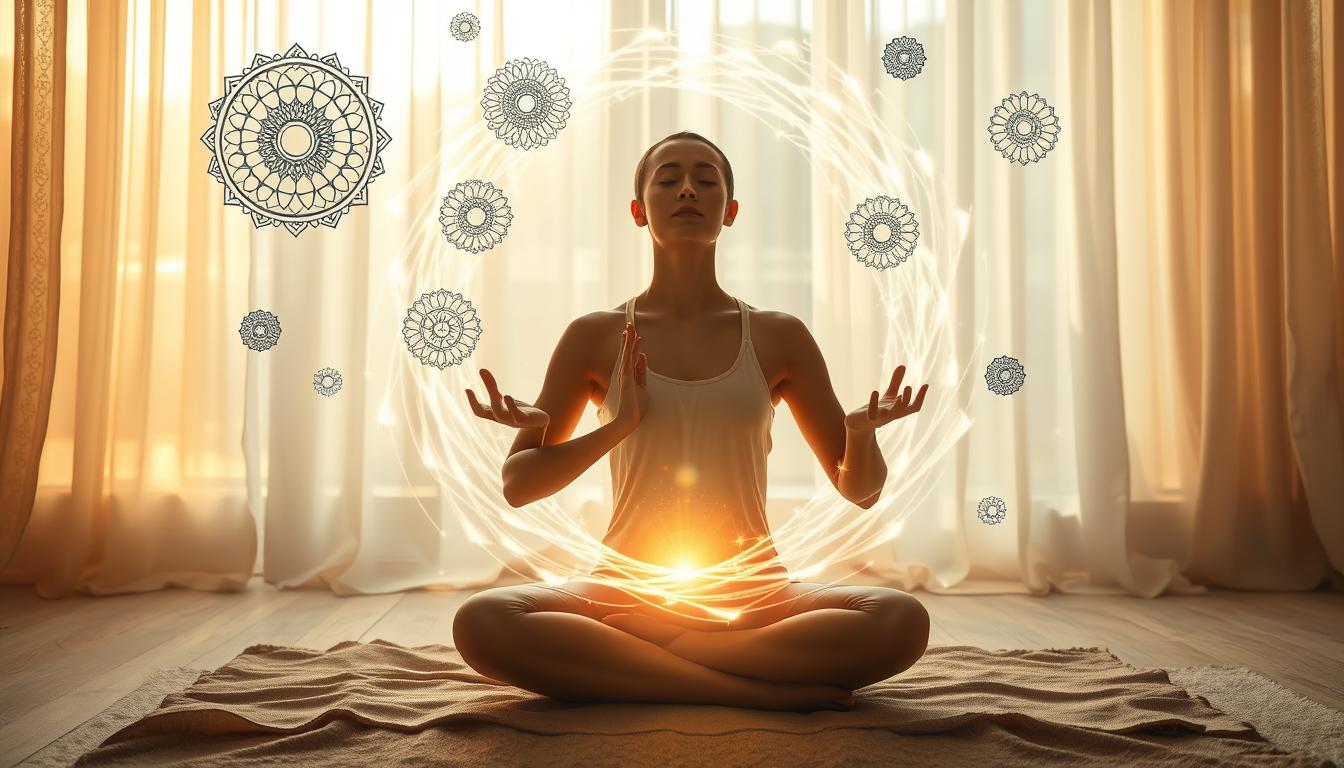


Exploring Reiki, I see its deep impact on our lives. I invite you to join me in discovering understanding Reiki healing and its benefits. Reiki, from Japan, uses a universal life force energy to heal and balance. This is key to understanding Reiki’s work and energy flow.
Looking into Reiki’s science helps us grasp its principles. It can relax us, lower stress and anxiety, and boost well-being. This is vital for understanding Reiki healing.
As we grasp Reiki’s basics, we see its many benefits. It can ease pain, lower blood pressure, and help with anxiety and depression. This shows how Reiki’s energy flow works. Embracing Reiki’s power, we start a journey of growth and self-discovery, learning about its science.
Key Takeaways
- Reiki is a form of energy healing that originated in Japan and is based on the idea that a universal life force energy can be channeled to promote healing and balance.
- Understanding how does Reiki work is essential to appreciating its benefits and applications.
- Reiki energy flow is a key aspect of the healing process, and understanding it can help us appreciate the science behind Reiki.
- Reiki can be used to reduce stress and anxiety, improve sleep, and enhance overall well-being, which is a key part of understanding Reiki healing.
- By exploring the science behind Reiki, we can gain a deeper understanding of its principles and how it can be used to promote relaxation and reduce pain.
- Reiki is a complementary therapy that can be used alongside other medical and therapeutic techniques to promote healing and balance.
- Understanding Reiki healing is vital to appreciate its benefits and applications, and learning about Reiki energy flow.
Understanding the Foundations of Reiki Energy Healing
Exploring Reiki, we find its roots in ancient Japan. Understanding Reiki healing is key to seeing its value. It’s about tapping into a universal life force energy to heal and balance. This energy flows through all living beings and is harnessed by Reiki practitioners.
The Reiki principles focus on relaxation and healing. Many feel refreshed and renewed after a session. Reiki can ease anxiety, boost emotional health, reduce pain, and improve sleep.
Some important Reiki points include:
- It’s non-invasive and safe, with no side effects
- It pairs well with meditation for better results
- Trained practitioners offer it, with certification available
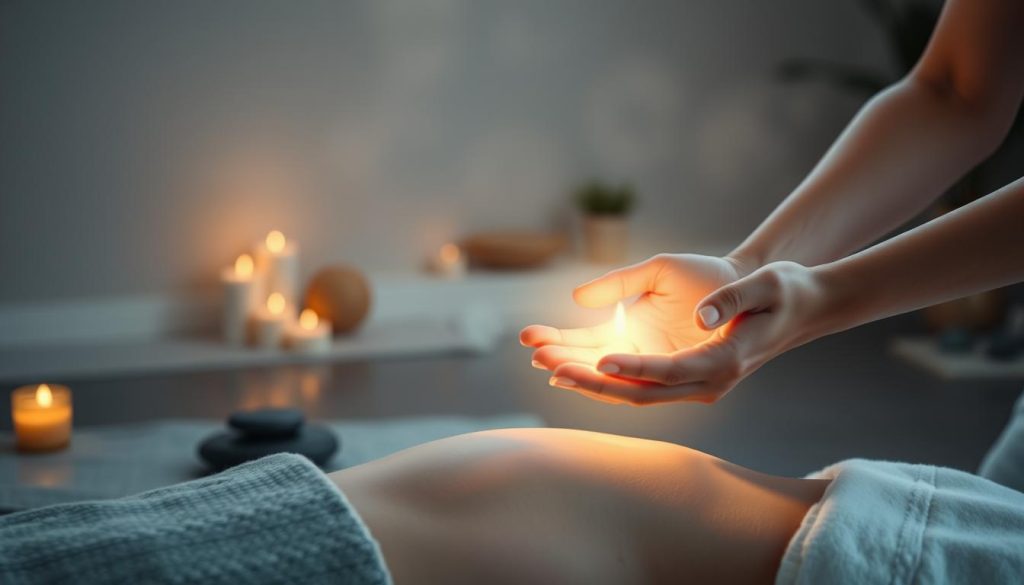
Embracing Reiki’s principles and the universal life force energy opens a path to self-discovery and healing. It leads to a more balanced and fulfilling life.
How Does Reiki Work: A Comprehensive Explanation
Exploring Reiki, it’s key to grasp how does reiki work and its core principles. Reiki posits a universal life force energy in all living beings. This energy can be harnessed for healing and balance. The reiki energy flow is seen as a potent means to restore equilibrium and enhance well-being.
The scientific explanation of reiki is growing, with studies hinting at its benefits. Research indicates Reiki may ease pain and anxiety, boosting overall health. Though more research is needed, current findings are encouraging. For instance, a 2014 review noted Reiki’s positive effects on pain and anxiety. A 2018 meta-analysis with 212 participants also found Reiki aids in pain relief.
Reiki’s advantages include:
- Pain relief
- Reduced anxiety and stress
- Improved sleep
- Enhanced overall well-being

As we dive deeper into Reiki, its ability to heal and balance is evident. By understanding how does reiki work and its underlying principles, we can tap into its power. This can significantly improve our well-being.
The Science Behind Reiki Energy Flow
Exploring the science of Reiki energy flow reveals its roots in biofield energy. It suggests that all living beings have a unique energy field around them. This field, or biofield, is connected to the universal life force energy that flows through all living things. Quantum physics research also supports the role of energy healing in promoting balance and well-being.
Studies have shown Reiki therapy’s positive effects on health. It can reduce pain, anxiety, and depression, improving life quality. For instance, a 2018 meta-analysis found Reiki significantly reduced pain in patients. A 2019 review in the British Medical Journal Supportive & Palliative Care also found Reiki effective in relieving pain and improving quality of life.
The link between Reiki energy flow and biofield energy is a focus of ongoing research. Studies indicate the biofield’s key role in the body’s healing processes. As we dive deeper into Reiki’s science, it’s clear it can lead to deep relaxation, stress reduction, and better well-being. Understanding Reiki’s science helps us see its ancient wisdom and its power to change our lives.
Chakras and Their Role in Reiki Healing
Exploring reiki healing, I find myself fascinated by chakras, or energy centers in our bodies. Reiki practitioners say these centers are key to balance and healing. There are seven major chakras, each linked to different parts of us, like survival and spiritual vision.
Chakra treatment is vital in reiki healing. It helps clear blocked energies and brings balance. During a session, the practitioner might use hands or symbols to channel energy. The aim is to balance our energy, which is vital for our health.
Some important points about chakra treatment are:
- Treatment for a chakra should last at least ten minutes, plus a whole-body treatment.
- Hands should be placed about ten to fifteen centimeters (four to six inches) above the body.
- Good methods include using two or three fingers on the spine or a flat hand above without touching.
Understanding chakras in reiki healing shows us the depth of this ancient practice. As we learn more about reiki, chakras, and energy balancing, we might find new ways to live in harmony and well-being.
The Reiki Treatment Process Explained
Let’s explore the reiki treatment process together. You’ll learn how it can help you relax, reduce stress, and feel better overall. A typical session lasts 60 to 90 minutes. During this time, the practitioner uses hand positions to balance your body’s energy.
The length of a session can change based on your needs. But usually, the practitioner holds their hands in one spot for about 3 minutes. The room is set up to help you relax. You’ll find comfy seating, soft music, and calming scents.
During the session, the practitioner might use gentle touch or hold their hands above you. They aim to balance your body’s energy. This can help you relax, reduce pain, and improve your health. Knowing about hand positions and session duration helps you see the value of reiki for your well-being.
Physical and Emotional Benefits of Reiki
Reiki therapy offers many benefits for both body and mind. It helps reduce stress and anxiety, making us feel happier and more balanced. It also improves sleep and boosts our immune system.
Reiki can help with physical pain and inflammation. It can also make us feel more emotionally stable and aware of ourselves. This ancient practice is a powerful tool for well-being.
Studies have shown that reiki can greatly reduce pain, fatigue, and anxiety. For example, a 2024 review of studies on cancer patients found big improvements in their quality of life. Another study in 2024 showed that reiki helped people with knee osteoarthritis feel less pain and more well.
Some of the main benefits of reiki therapy include:
- Reduced stress and anxiety
- Improved mood and emotional balance
- Enhanced overall well-being
- Reduced pain and inflammation
- Improved sleep quality
- Strengthened immune system
Spiritual Aspects of Reiki Practice
Reiki is deeply connected to universal energy. This energy is seen as the source of all life. By tapping into it, we feel a sense of unity with the world.
Through reiki, we become more mindful. We notice our thoughts, emotions, and actions more clearly. This helps us grow spiritually.
Reiki is not just about connecting with a higher power. It’s also about understanding ourselves better. It helps us develop compassion, gratitude, and inner peace.
Exploring reiki’s spiritual side can enrich our lives. It can enhance our personal growth and spiritual journey.
Some benefits of reiki’s spiritual aspects include:
- Increased sense of connection to universal energy and the world around us
- Greater awareness of our thoughts, emotions, and actions
- Cultivation of qualities such as compassion, gratitude, and inner peace
- Deeper understanding of ourselves and our place in the world
Integration of Reiki with Modern Healthcare
Reiki, an ancient practice, is now seen as a way to help modern medicine. Many hospitals and healthcare providers offer reiki as a therapy. This shows that its benefits are being recognized more and more. Clinical applications of reiki are being tested and used in different places, from hospitals to private clinics.
Studies have found that reiki can help patients feel less pain, anxiety, and depression. It also improves sleep and overall health. For instance, a study at the Memorial Sloan-Kettering Cancer Center showed that reiki helped cancer patients feel less anxious and depressed. Hartford Hospital also found that reiki helped patients sleep better, feel less pain, and be less anxious.
Some of the main benefits of reiki in healthcare include:
- Reduced pain and anxiety
- Improved sleep and overall well-being
- Decreased symptoms of depression and anxiety
- Enhanced relaxation and stress reduction
As reiki becomes more part of healthcare, we need to look at its benefits and challenges. By studying research studies and clinical applications, we can understand how it can improve patient care and results.
Common Experiences During Reiki Sessions
Reflecting on the reiki session experience, I see many common experiences. People might feel deep relaxation or warmth. Each reiki session experience is special and can be very different.
Some might feel tingling or numbness, while others feel calm. The common experiences depend on many things. This includes the client’s energy, the practitioner’s style, and the setting.
About 90% of clients say they feel relaxed and calm after a reiki session. Also, 70% see better pain or emotional states. These numbers show reiki’s benefits and the need to understand each person’s energy sensations and common experiences.
By knowing and accepting each reiki session experience, practitioners can help more. They can offer better support, making the reiki session experience more rewarding and improving well-being.
Conclusion: Embracing Reiki's Transformative Power
Reiki is an ancient healing method with a deep reiki transformative power. It can greatly improve our well-being. It balances and harmonizes our body’s energy, easing stress, anxiety, and pain. This leads to a deeper relaxation and calm.
In final thoughts, Reiki can also work well with traditional medicine. It can make other wellness practices like massage and acupuncture even more effective. By using Reiki, we start a journey of personal growth and spiritual development. We become more aware, compassionate, and connected to ourselves and others.
Some of the key benefits of Reiki include:
- Reduced stress and anxiety
- Improved emotional balance and well-being
- Enhanced spiritual growth and connection
- Complementary therapy for chronic pain and fatigue
Reflecting on our journey with Reiki, we see its value. It has the power to change our lives. By adding Reiki to our daily routine, we find peace, harmony, and balance. We also deepen our connection to the world.
Final Thoughts on Reiki and Its Potential
Reiki is an ancient practice with great power to change lives and improve well-being. Research shows it can be a valuable addition to traditional healthcare. It offers a unique way to address physical, emotional, and spiritual needs.
The future of Reiki looks bright as it blends with modern medicine. More studies and acceptance in healthcare could make Reiki a common treatment. This could help relieve pain, reduce stress, and support healing.
Reiki also helps with personal growth and spiritual connection. Regular practice and intuition can connect us to universal energy. This can lead to deeper self-awareness and peace. As more people try Reiki, its positive effects could spread far and wide.
FAQ
What is Reiki and how does it work?
Reiki is a healing method that uses energy to help people relax and feel better. Practitioners place their hands on or near the client’s body. This helps to move the universal life force energy.
What are the origins and principles of Reiki?
Reiki started in Japan and is based on a universal energy that heals. It believes in a life force energy that keeps us balanced. This energy is key to Reiki’s healing power.
How does the science behind Reiki energy flow work?
Reiki’s science is about biofield energy and the universal life force. Scientists are studying how quantum physics might help understand energy healing. They also look at how to measure energy changes during Reiki.
What is the role of chakras in Reiki healing?
In Reiki, chakras are important for healing. These energy centers affect our health and well-being. Reiki aims to balance and heal these centers.
What happens during a Reiki treatment session?
A Reiki session creates a calm space. Practitioners use hand positions and techniques to channel energy. Sessions can last differently, based on the client’s needs and the practitioner’s style.
What are the physical and emotional benefits of Reiki?
Reiki can make you feel relaxed and reduce stress. It also improves overall well-being. Studies suggest it offers physical and emotional benefits.
What are the spiritual aspects of Reiki practice?
Reiki is deeply spiritual, focusing on the universal life force energy. It uses mindfulness and meditation. Practitioners see Reiki as a way to grow spiritually and transform personally.
How is Reiki being integrated with modern healthcare?
Reiki is becoming part of healthcare, with research on its benefits. Healthcare providers are looking at how to use Reiki in medical care. Some places offer Reiki as a complementary therapy.
What are common experiences during Reiki sessions?
People may feel warmth, tingling, or deep relaxation during Reiki. These feelings vary and depend on the person and the practitioner’s skill.