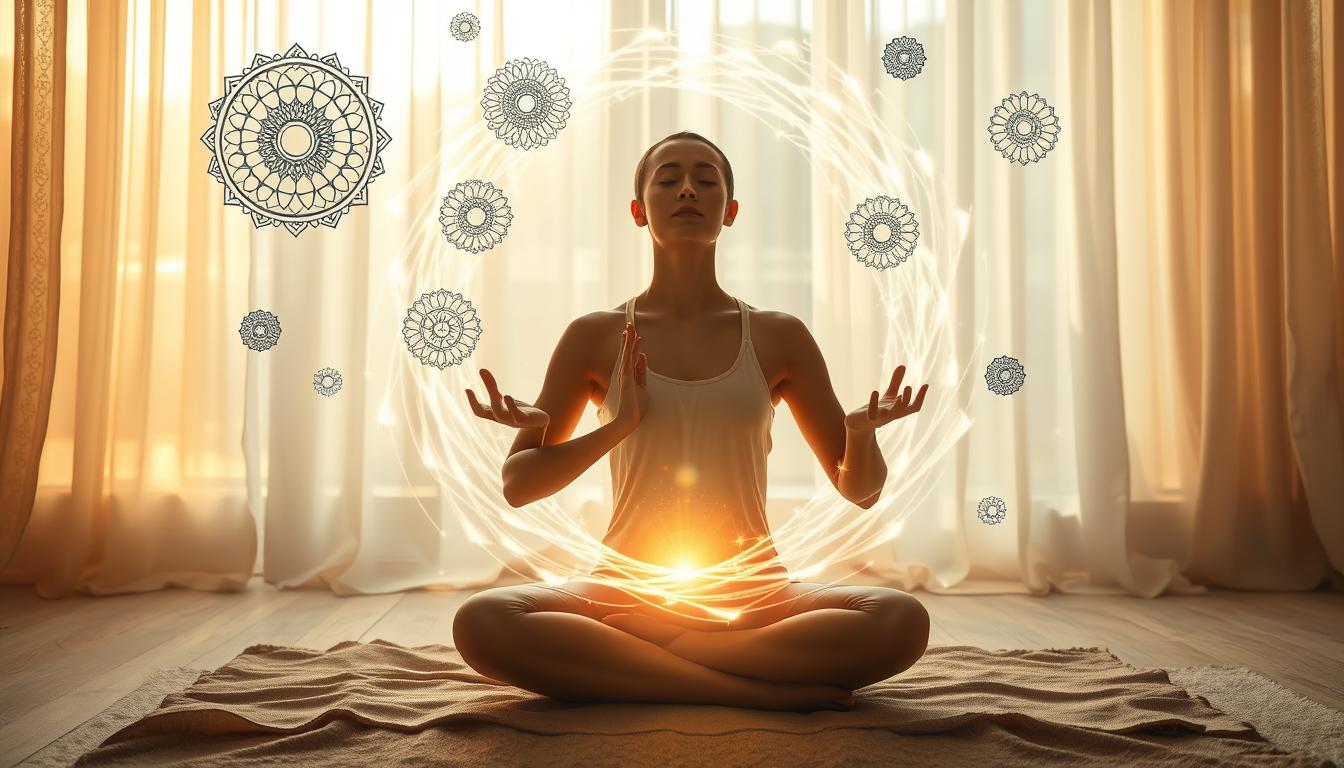


As a Reiki practitioner, I’ve seen many ask: How can hands near the body change health and well-being? This article looks into how reiki energy works. It explores the science vs spirituality debate that makes it popular worldwide. Is it just a placebo, or does it really connect with unseen energy fields?
Key Takeaways
- Reiki’s origins blend ancient Japanese practices with modern energy healing concepts.
- Researchers debate whether its effects stem from quantum biofields or psychological factors.
- Clinical trials show physiological changes like reduced stress hormones in recipients.
- Practitioners worldwide now integrate Reiki with traditional medical treatments.
- This article bridges gaps between scientific skepticism and spiritual belief systems.
The Ancient Origins of Reiki Energy

Reiki’s history takes us from ancient Japan to today’s healing practices. For thousands of years, Eastern traditions have talked about Ki, or life force. Mikao Usui turned these ideas into a system we can use today.
The Japanese Roots of Reiki Practice
Japan’s spiritual world helped shape Reiki. Buddhist meditation and Shinto’s belief in nature’s energy are at its heart. Usui combined these to create a way to channel life force through touch.
- Influences: Shinto rituals, Buddhist teachings, and martial arts ki principles
- Central concept: Balancing ki to restore wellness
How Mikao Usui Developed the Reiki System
“The secret art of inviting happiness and light”
— One of Usui’s five guiding principles. After a 21-day meditation on Mount Kurama in 1922, he created Reiki’s five principles and hand positions. His system focused on self-improvement through spiritual energy work, teaching others how to transmit energy.
| Year | Development |
|---|---|
| 1922 | Usui establishes first Reiki center in Tokyo |
| 1938 | Usui’s student Chujiro Hayashi adapts Reiki for public use |
The Global Spread of Reiki Healing
Reiki’s popularity soared when Hawayo Takata brought it to Hawaii in the 1930s. By the 1970s, her 22 students had trained thousands, mixing Eastern spirituality with Western wellness. Today, over 800,000 practitioners worldwide use these methods, showing its lasting impact.
Understanding the Fundamental Principles of Reiki
Reiki is based on five key principles, known as the Gokai. These principles focus on being thankful, kind, and mindful. They encourage a positive outlook with sayings like “Just for today, I release anger,” and “Just for today, I release worry.”
Reiki believes in a universal life force that everyone can tap into. Practitioners learn to use this energy in sessions to balance the body’s energy. They use hand placements to guide the energy flow, even without touching.
Training in Reiki has three levels:
- Shoden (Level I): Introduction to energy basics and self-treatment
- Okuden (Level II: Advanced techniques like distance healing
- Shinpiden (Master Level: Teaching others and mastering symbols
Each level helps deepen the understanding of Reiki’s interaction with the body’s subtle systems.
Practitioners use symbols like Cho Ku Rei or Sei He Ki to focus energy. While meanings can differ, everyone agrees that regular practice boosts one’s healing abilities. These principles guide both ethics and practical use for better well-being.
How Reiki Energy Works: Science vs. Spirituality
Modern science and ancient traditions both try to understand Reiki energy. Reiki science looks at energy fields, while spiritual views see it as life force in all living things.
The Scientific Perspective on Energy Transfer
Scientists study biofield theories to understand energy transfer. Reiki science looks into:
- Changes in electromagnetic fields seen with thermal imaging
- Shifts in heart rate variability during sessions
- Brain activity tracked through neuroimaging during treatment
Quantum Physics and Biofield Theories
Quantum models show energy fields interact in ways beyond classical physics. Some theories suggest:
- Non-local connections between the practitioner and client
- Consciousness affecting energy flow
The Spiritual Understanding of Life Force Energy
Spiritual traditions view Reiki as balancing life force (chi) through chakras. Blocked energy leads to imbalance, and Reiki “unblocks” these pathways. Practitioners feel energy shifts intuitively.
Reconciling Both Worldviews in Modern Practice
| Aspect | Scientific View | Spiritual View |
|---|---|---|
| Energy Basis | Bioelectromagnetic fields | Universal life force (prana) |
| Healing Mechanism | Neurophysiological changes | Energy pathway clearing |
Many practitioners mix both views. A 2023 NIH study found stress reduction in patients meditating on spiritual principles. This shows combining both views can help healing.
What Happens During a Typical Reiki Session
Every detail in a Reiki session is made to help with energy healing. I start by setting up a comfortable space. The room is softly lit, and I use crystals or essential oils to clear energy.
Preparing the Space for Energy Healing
I create a quiet, private area for clients. They can lie on a padded table or sit in a chair. Before starting, I cleanse the space with smudging or sound bowls to remove old energy.
Clients stay fully clothed but remove jewelry or tight clothes for comfort.
Reiki Hand Positions and Their Purposes
My hands are placed gently above or on the body in six positions. Each position helps with energy flow:
| Position | Body Area | Purpose | Duration |
|---|---|---|---|
| 1 | Feet | Grounding and balance | 3-5 minutes |
| 2 | Lower Legs | Supports circulation and detox | 3-5 minutes |
| 3 | Abdomen | Aids digestion and emotional release | 5 minutes |
| 4 | Heart Level | Promotes emotional healing | 5 minutes |
| 5 | Neck | Relieves tension and stress | 4 minutes |
| 6 | Crown of Head | Promotes mental clarity | 5 minutes |
What Clients Experience During Treatment
Most clients feel warmth, tingling, or deep relaxation. Some experience emotions rising and passing as energy shifts. A 60-minute session allows for these natural reactions.
Afterward, I suggest drinking water and journaling to integrate the experience.
“I felt a wave of calm spread from my hands to my chest—it was like a reset button for my stress,”
one client shared. Sessions are silent, but questions are welcome. After the session, I advise rest and hydration to support healing.
Reiki therapy sessions focus on client comfort, with no pressure to speak. The goal is to guide energy to where it’s most needed.
The Energetic Body: Chakras and Reiki
As a Reiki practitioner, I’ve seen how Reiki energy flows through seven primary chakras. These are spinning wheels of light along the spine. They connect our physical, emotional, and spiritual states. Let’s look at how Reiki practitioners fix imbalances here.
- Root Chakra (Muladhara): At the base of the spine, it’s about grounding and security. Issues here might show as anxiety or fatigue. Reiki helps restore stability.
- Sacral Chakra (Svadhisthana): Near the navel, it’s about creativity and sexuality. Reiki energy here can ease emotional overwhelm.
- Solar Plexus (Manipura): Above the stomach, it’s about self-worth. Practitioners place hands here to support confidence and digestion.
- Heart Chakra (Anahata): At the chest, it’s about love and compassion. Blocked energy here may lead to relationship struggles or grief.
- Throat Chakra (Vishuddha): In the throat, it affects communication. Reiki can help those struggling to express needs.
- Third Eye (Ajna): Between the eyebrows, it’s linked to intuition. Sessions here may clarify decision-making.
- Crown Chakra (Sahasrara): At the top of the head, it connects to spirituality. Reiki energy here promotes inner peace and connection to higher consciousness.
Practitioners don’t “diagnose” chakra issues but sense imbalances through heat, tension, or emotional cues. Science hasn’t validated chakras physically, but this framework guides holistic healing. The image below shows the chakra pathways many practitioners reference.
Understanding chakras deepens how I apply Reiki. Balancing them isn’t about replacing medicine but supporting overall wellness. This approach aligns with holistic healing’s focus on mind-body unity.
My Journey as a Reiki Practitioner
My journey to becoming a Reiki practitioner started during a tough time. I had chronic pain for years and looked for new ways to heal. That’s when I found Reiki therapy.
One session changed everything. It brought me peace and made me curious about Reiki. This curiosity turned into a passion for helping others.
How I Discovered Reiki Therapy
My first Reiki session was eye-opening. As someone who didn’t believe in it, I felt warmth in my body. This made me want to learn more about Reiki.
I started researching its history and benefits. Soon, I signed up for courses to learn about energy and how to use it.
My Training and Certification Process
Getting certified was a big commitment. I followed the Usui Reiki Ryoho system. I went through three levels: basic, advanced, and master.
Each level taught me more about energy and how to connect with it. I learned about hand placements and how to practice ethically. After mastering these, I got my certification.
Transformative Client Experiences I’ve Witnessed
Every session is a new learning experience. One client was dealing with grief and found peace through Reiki. Another had fewer migraines after regular sessions.
These stories show how Reiki can heal the body and mind.
“The calm I felt during sessions helped me reconnect with my body,” said one client, embodying the healing many describe.
Scientific Research on Reiki’s Effectiveness
Debates between Reiki science and Science vs Spirituality are ongoing. Modern studies aim to measure Reiki’s effects. Recent trials show mixed but hopeful results. Here’s what the data indicates:
Recent Clinical Studies and Their Findings
- Pain management: 2023 studies in JAMA Network Open found a 30% pain decrease in arthritis patients.
- Anxiety: 2022 meta-analyses showed a 22% drop in stress hormones after treatment.
- Post-surgery recovery: Johns Hopkins trials found quicker wound healing in cardiac patients.
Physiological Changes Observed During Reiki Treatment
| Measurement | Observed Change |
|---|---|
| Heart rate variability | Increased parasympathetic activity |
| Cortisol levels | Average 15% reduction |
| Immune markers | Raised natural killer cell counts |
| EEG patterns | Higher theta/alpha wave dominance |
Limitations of Current Research
Despite progress, challenges persist:
- Small sample sizes in 60% of published trials
- Difficulty blinding practitioners in controlled trials
- Lack of standardized energy measurement tools
Collaborations between academic hospitals and energy healers are improving protocols. While skepticism remains, institutions like the NIH now fund pilot studies on Reiki science. This evolving research landscape offers cautious optimism for bridging the gap between Science vs Spirituality.
Integrating Reiki with Conventional Medicine
More hospitals and clinics in the U.S. now see holistic healing methods like Reiki therapy as valuable. They offer Reiki sessions alongside treatments like chemotherapy and surgery. This helps ease symptoms and boosts well-being.
Nurses and doctors notice patients recover faster and feel less stressed when they get both treatments.
“Integrating Reiki into our oncology unit has helped patients manage treatment side effects without drugs,” says a palliative care specialist at a major healthcare network.
Reiki therapy is most effective as an addition in these situations:
- Pre-surgery to calm anxiety
- Post-operation to aid physical healing
- During chronic illness to support immune function
Hospitals work with trained Reiki practitioners to create peaceful spaces for patients. But, it’s key to talk about Reiki with your medical team. Always follow their advice. While Reiki therapy can help with holistic healing, it doesn’t replace prescribed treatments.
Talking openly with your healthcare providers is important for safe, effective care. As more healthcare professionals look into integrative options, Reiki’s role in supporting traditional medicine is growing. But, it’s always chosen as a science-backed, collaborative option.
Self-Healing Techniques Using Reiki Energy
Energy healing isn’t just for professionals. You can use spiritual energy every day. Here’s how to get started:
Daily Practices for Energy Balance
Start your day with these easy steps:
- Wake up with a 3-minute deep breathing exercise to align your energy field.
- End the day by placing your hands on your heart and crown to restore calm.
- Use grounding techniques like walking barefoot or holding crystals to strengthen your energy shield.
Self-Treatment Hand Positions
Follow this step-by-step guide:
- Rest hands on the crown for 3 minutes to boost mental clarity.
- Place palms over the heart for 2 minutes to nurture emotional well-being.
- Hold hands over the abdomen for 1 minute to support digestion.
| Position | Purpose |
|---|---|
| Crown | Enhances spiritual awareness and intuition |
| Heart | Promotes emotional healing and compassion |
| Abdomen | Supports vitality and physical energy flow |
Combining Meditation with Reiki Practice
Many people mix these methods for better results. Try this guided technique:
“Visualize golden light flowing from the crown to the heart, then down to the feet. Breathe in calm, exhale tension.”
Practice for 5-10 minutes daily to connect with spiritual energy. No attunement? Focus on intention and breath—you’ll feel the benefits.
Common Misconceptions About Reiki Healing
As a Reiki practitioner, I’ve heard many questions about how Reiki energy works. It’s important to clear up these misunderstandings. This way, people can understand it better.
- Myth: Reiki is a religious practice. Fact: It’s spiritually neutral. People of all beliefs or none can use it.
- Myth: Practitioners control healing. Fact: We channel energy, but the body decides where it goes.
- Myth: You must believe for it to work. Fact: Studies show it works even when people are skeptical. Being open can make the experience better.
- Myth: Only for illness. Fact: It helps with wellness and emotional balance too, not just in emergencies.
- Myth: Instant fixes are guaranteed. Fact: Results come slowly, like easing tension over time.
- Myth: No training required. Fact: Reiki practitioners need training to use it safely and effectively.
- Myth: Replaces medical care. Fact: It’s meant to work alongside, not instead of, medical treatments. Always talk to doctors first.
My experience shows Reiki’s value in its flexibility. Trained Reiki practitioners blend science with energy-based practices. By debunking these myths, more people can see its benefits without confusion.
Conclusion: Embracing the Holistic Power of Reiki
Reiki has traveled from ancient Japan to today’s healing methods. It’s seen as both a science and a spiritual practice. It focuses on balancing life force energy, which is key to wellness.
As a practitioner, I’ve seen how Reiki does more than just fix physical issues. It also helps with emotional and mental health. This shows its true power.
Studies are ongoing to understand how Reiki affects our biofield. But many people already see its benefits. It works well with traditional medicine, showing its value in many health areas.
At its heart, Reiki is about spiritual energy. It helps people tap into their own healing power. This is what makes it special.
Want to try Reiki? Start with a session to see how it affects you. Simple practices like hand positions or meditation can deepen your connection. Training programs offer a way to learn more, blending old traditions with new ways.
Reiki is all about being adaptable. It values both science and intuition. This lets everyone experience it in their own way. Whether through studies or personal use, the goal is always to help people feel whole.
My experience with Reiki has been real and powerful. It connects ancient wisdom with today’s needs. If you’re curious, exploring Reiki could change how you see health and energy.
FAQ
What is Reiki energy and how does it work?
Reiki energy is a universal life force that flows through all living things. As a Reiki practitioner, I channel this energy. It helps in holistic healing by addressing energy blockages in the body.These blockages can cause physical or emotional issues. I use specific hand positions to help the energy flow freely. This allows the body to heal itself.
Is there scientific evidence supporting Reiki therapy?
Research on Reiki is ongoing, but some studies show benefits. These include reduced anxiety and pain relief. Yet, more studies are needed to fully understand Reiki’s effects.It’s important to look at Reiki from both scientific and spiritual angles. This helps us grasp its complexities.
Can anyone learn Reiki, or do you need to be specially trained?
Anyone interested in energy healing can learn Reiki. But, it usually requires training with a certified practitioner. In training, you learn about Reiki’s principles, hand positions, and symbols.
What happens during a typical Reiki session?
In a Reiki session, I create a calm space for clients. I use hand positions on or near the body to channel energy. Clients might feel warmth, tingling, or deep relaxation.
Sessions last about an hour, and clients stay fully clothed.
How do Reiki and traditional medicine work together?
Reiki and traditional medicine can work together to improve patient care. Reiki can help with stress reduction and pain management. Many healthcare providers now see the value of Reiki as a complement to medical treatments.
Are there any misconceptions about Reiki I should be aware of?
Yes, there are misconceptions about Reiki. Some think it only works if you believe in it. But, many people report positive experiences without believing in it beforehand.
Also, Reiki is not a substitute for medical care. It’s meant to be used alongside traditional treatments.
Q: What are the health benefits of Reiki?
A: The health benefits of Reiki may include reduced stress and anxiety, improved emotional well-being, enhanced relaxation, and pain relief. Research suggests that it can also support the body’s natural healing processes and complement other forms of medical treatments.
Q: How does Reiki work?
A: Reiki works by channeling universal life force energy through a practitioner to the recipient. During a session, the Reiki master may place their hands lightly on or near the recipient’s body to facilitate the flow of healing energy and balance the body’s energy centers.
Q: What happens during a Reiki session?
A: During a Reiki session, the recipient typically lies down fully clothed while the Reiki practitioner may place their hands in various positions on or above the body. The session usually lasts between 30 to 90 minutes and aims to promote relaxation and healing by enhancing the flow of energy.
Q: Are there any risks or side effects of Reiki?
A: Reiki is considered a safe and gentle complementary therapy with minimal risks. Some individuals may experience a temporary emotional release or mild fatigue after a session, but these effects are typically short-lived. It is important to consult with a qualified practitioner if you have any specific health concerns.
Q: How can I find a Reiki practitioner?
A: To find a Reiki practitioner, you can search through directories such as the International Association of Reiki Professionals or the International Center for Reiki Training. Additionally, local holistic health centers or wellness clinics may offer recommendations.
Q: Can Reiki be used alongside other treatments?
A: Yes, Reiki is a complementary therapy and can be used alongside conventional medical treatments and alternative medicine. It does not replace medical advice but can enhance overall well-being and support the healing process.
Q: What is the effect of Reiki on pain and anxiety?
A: Reiki may have a positive effect on pain and anxiety by promoting relaxation and reducing stress levels. Many individuals report feeling more at ease and experiencing less discomfort after a Reiki session.
Q: What is the significance of Reiki training?
A: Reiki training is essential for those wishing to become a Reiki practitioner or master. It provides knowledge about the principles of energy healing, hand positions, and techniques necessary to safely and effectively channel healing energy to others.
Q: Is Reiki considered alternative medicine?
A: Reiki is often classified as a form of energy healing and can be viewed as a complementary and integrative approach to health care. While it is not a substitute for conventional medicine, it is recognized for its potential health benefits and is used by many as part of a holistic health strategy.